Red tourism a special read for history









Editor's note: Red tourism is booming, as was seen during just concluded May Day holiday. Why has red tourism become so popular, especially among youths? Three experts share their views on the issue with China Daily's Yao Yuxin. Excerpts follow:
Centenary fuels people's passion for red sites
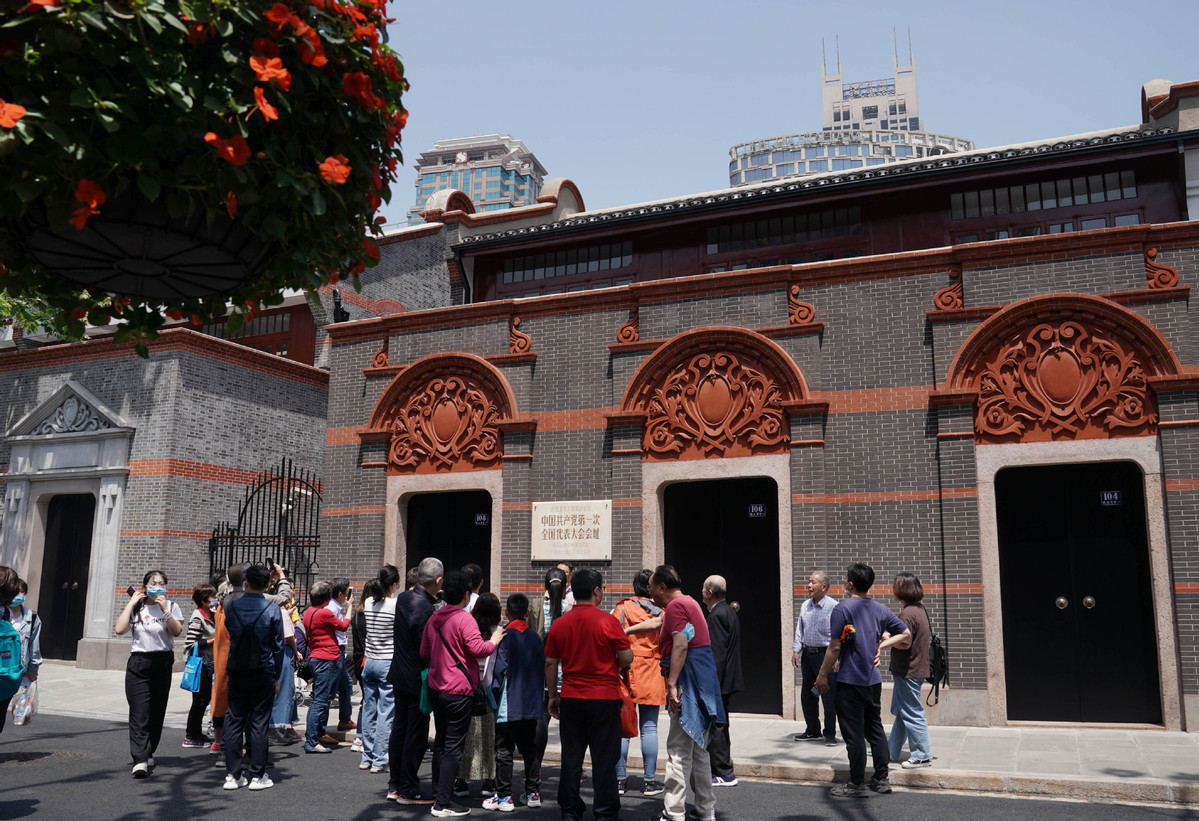
Red tourism, or a subset of tourism in which people visit sites with historical significance for communism in China, is booming in the country with the number of trips increasing tenfold to 1.41 billion from 2004 to 2019. And judging by huge number of people visiting such sites during the just concluded May Day holiday, red tourism is expected to grow further this year, as it marks the 100th anniversary of the founding of the Communist Party of China.
The CPC and Chinese government have made great achievements since the founding of New China, from rapid economic development to elimination of absolute poverty and drastic improvement in people's living standards. And now that China has managed to effectively contain the novel coronavirus pandemic within its borders, more and more people want to know the detailed history of the Party and how it developed into what it is today. Red tourism can help them know that.
That's why an increasing number of people are visiting sites of historical significance to the Party. By visiting such places, people gain a better knowledge about the Party, better appreciate the country's system and Chinese culture, and pass down the "red genes and revolutionary fire" to the next generations.
To boost red tourism, the government has built 2,442 kilometers of roads from 2017 to 2020 to connect the revolutionary sites, with more than 90 percent of those roads being in central and western China. Red tourism has also boosted the local economies and thus helped alleviate poverty in those areas. And it will continue to do so and facilitate rural revitalization.
Just like the War of Independence is an integral part of the United States' history, so is the Long March a glorious chapter in China's revolutionary history. But it is necessary to stay true to the fundamental purpose of highlighting the importance of the revolutionary sites, and refraining from excessive commercialization of those sites or spreading inaccurate information to please the tourists.
Liu Jianping, a professor studying on red tourism at Xiangtan University in Hunan province
Quality service vital to promoting tourism
Chinese youths, in increasing numbers, are showing keen interest in traditional culture. From hanfu, a traditional dress of the Han people, to TV programs such as Masters in Forbidden City, many products and programs are reviving traditional Chinese culture and drawing young fans. As a part of Chinese culture, "red culture" is also growing in popularity. That several movies with revolutionary themes have become blockbusters shows that an increasing number of people are becoming interested in China's revolutionary history and sites.
The red tourism boom signifies the release of potential demand, which didn't happen in the past because the infrastructure facilities around those sites were underdeveloped. Now, since the infrastructure has greatly improved, more visitors are expected to flock to the red tourism sites.
Yet red tourism, as a cultural industry, still has a long way to go in fully conveying the stories of the revolutionary years, which is important to to attract tourists. In particular, since young people prefer to keep late hours, tourist attractions should adjust their schedule by extending their business hours and introducing live-action performances at night to attract young tourists and also boost the nighttime economy.
In fact, the government has already emphasized the importance of integrating culture and tourism, including red tourism and national cultural parks, in the 14th Five-Year Plan (2021-25), demonstrating that it is serious about boosting the tourism and cultural industries.
Sun Jiashan, a researcher at the Chinese National Academy of Arts
Red tourism can help boost local economy
Different people have different tastes. It's natural for many people to prefer Chinese culture including "red culture". China's efforts to develop and protect red tourism sites, which are rich in revolutionary history, have met the demands of "revolutionary pilgrims".
By visiting revolutionary sites, Chinese people, particularly the youths, will gain a better knowledge of the heroic deeds of the pioneers who sacrificed (and were ready to sacrifice) their lives for the nation, and because of whom we are enjoying a happy life today. Red tourism can also inspire people to work hard to realize national rejuvenation, while on-site classes and dissemination of information will promote patriotic education and instill in people a better sense of belonging to the country.
Many revolutionary sites are located in remote and impoverished areas, and red tourism can help improve the local economy there. Yet red tourism still faces some problems, For instance, infrastructure around many sites is still underdeveloped, mainly due to a lack of investment and marketing.
As for some foreign media outlets criticizing the flourishing red tourism sector in China saying it promotes a certain type of ideology, it can't be said that red tourism has nothing to do with ideology, but red tourism is more a part of the tourism industry that is in line with modern China's efforts to boost service sector and promote education campaigns.
Liu Dongchao, a professor at the Party School of the CPC Central Committee
The views don't necessarily represent those of China Daily.