Promoting China-ASEAN relations by deepening industrial cooperation









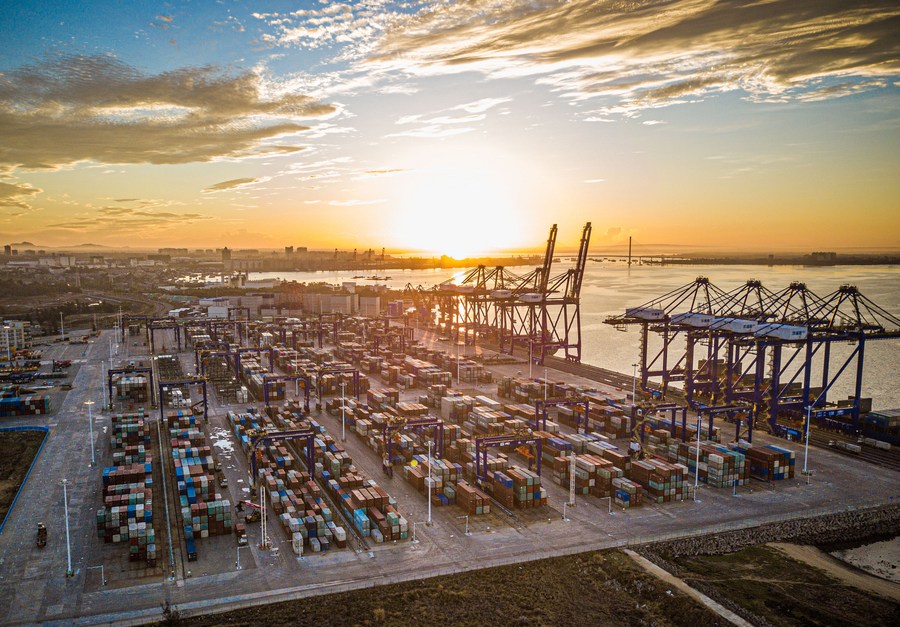
This year marks the 30th anniversary of the establishment of the China-ASEAN dialogue relations. In the morning of Nov22, 2021, the anniversary was commemorated via video and the dialogue officially announced the establishment of the China-ASEAN Comprehensive Strategic Partnership.
Since 2020, ASEAN has remained China's largest trading partner. From January to November of this year, the total value of China's imports and exports of goods with ASEAN was 5107.25 billion yuan ($798 billion), a year-on-year increase of 20.6 percent, accounting for approximately 14.4 percent of China's total foreign trade. .
Under the new historical context, while strengthening cooperation in the fields of infrastructure construction, manufacturing, agriculture, economy and trade, China and ASEAN should further deepen cooperation in marine economy, tropical high-efficiency agriculture, digital economy and other fields. .
First, deepening maritime economic cooperation and promoting the establishment of China-ASEAN partnership on blue economy. The establishment of the China-ASEAN partnership on blue economy is one of the important goals set in the "China-ASEAN Strategic Partnership Vision 2030". The need to accelerate its establishment was also reiterated in the 24th China-ASEAN Summit held on Oct 26, 2021.
With a long coastline, most of the ASEAN countries are endowed with plentiful marine resources. China is also a big oceanic country with abundant marine resources. Therefore, it has great development potential for both China and ASEAN to steadily advance mutually beneficial cooperation in marine economic industries such as marine aquaculture, marine fishery processing, marine transportation, marine new energy, marine biopharmaceuticals, and marine environmental protection. There is extremely broad potential to jointly cooperate in the establishment of a fishery trading market and the exchange of modern fishery technology.
It is worth noting that at the 26th session of the Conference of the Parties (COP 26) to the UNFCCC (United Nations Framework Convention on Climate Change) held in November, the issue of blue carbon (ocean carbon sink) became one of the focal points. As the main natural carbon sink of the marine ecosystem, blue carbon has significant advantages over green carbon (forest carbon sink) in terms of carbon capture and storage, and is a crucial method to reach peak carbon-dioxide emissions and achieve carbon neutrality. Hence, China and ASEAN should actively explore ways to strengthen cooperation in blue carbon research, carbon sink fisheries, and blue carbon protection. In addition, the Hainan Free Trade Port (FTP) is promoting the establishment of an international carbon emission trading venue, by which the two parties can actively cooperate in the future.
Second, strengthening cooperation in the whole tropical agricultural industrial chain. With the development of China's economy, there is an increasing demand for tropical agricultural and fruit products, which are some of the main specialty products of ASEAN countries.
Let’s take the development of the coconut industry as an example. Currently, coconut production and exports are concentrated in Southeast Asia, where the coconut output accounts for more than 80 percent of the world. Hainan province is the most important coconut planting base and processing center in China, but its coconut output is seriously insufficient and there are nearly 2 billion coconuts imported to Hainan every year from the Philippines, Indonesia, Thailand, and Vietnam. Especially this year, coconut drinks have become increasingly popular in China, creating an atmosphere of "all drinks can be made with coconuts" in the Chinese beverage industry. Luckin Coffee, China's local chain brand, officially launched its coconut drink series in April this year, and by June 30, its coconut latte drinks had achieved a monthly sales volume of more than 10 million cups. Driven by this trend, some well-known Chinese beverage brands such as Nayuki Tea and Hey Tea have launched more than 160 coconut-related products.
Enterprises from ASEAN countries as well as China’s Hainan, Guangdong and other provinces can seize the opportunity to strengthen cooperation in the coconut-related industry, including planting, trading, processing, branding, as well as establishing trading center. This should enlarge the vast consumption market in the Chinese mainland. What needs to be pointed out is that tropical high-efficiency agriculture is one of the leading industries in the development of Hainan FTP. Hainan and ASEAN countries have many similarities in the field of tropical agriculture so that they can make full use of the benefits of the Hainan FTP’s “zero-tariff” policy, and actively develop the integration of production, learning, and research, and promote cooperation in tropical characteristic agriculture covering breeding, planting, logistics, import and export of raw materials and deep processing as whole industry.
Third, enhancing innovation cooperation in the digital economy industry. The digital economy is a significant direction for the future development of the Asia-Pacific and even the world. The COVID-19 pandemic has shown the importance of the digital economy in enhancing the resilience of the region. China and ASEAN kicked off a new era in 2020 as they launched the China-ASEAN Year of Digital Economy Cooperation. Thereafter, in November 2020, China and ASEAN released the Initiative on Building Partnership on Digital Economy and are currently formulating specific action plans around it.
The ASEAN digital economy enjoys huge potential and broad prospect with vast markets. According to the e-Conomy SEA 2020 report by Google, Temasek, and Bain & Company in November 2020, the internet industry and digital economy in Southeast Asia continued to maintain strong growth, reaching $100 billion in 2020, and was expected to exceed $300 billion in 2025. According to data from the ASEAN Secretariat, it is estimated that the size of the ASEAN digital economy would likely reach 8.5 percent of GDP in 2025, increasing from 1.3 percent in 2015. The Regional Comprehensive Economic Partnership (RCEP) agreement also underlines that digital trade will be treated with a more open attitude and sets out many specific terms for e-commerce.
The "China Internet Development Report 2021" pointed out that the scale of China's digital economy reaches 39.2 trillion yuan in 2020, accounting for 38.6 percent of GDP, maintaining a growth rate of 9.7 percent, and becoming a key driving force for stable economic growth. During the 14th Five-Year Plan (2021-2025) period, China's digital economy is expected to maintain an average annual growth rate of 9 percent, and the scale is expected to exceed 60 trillion yuan in 2025.
In the future, China and ASEAN should continue to lead by establishing China-ASEAN partnership on digital economy and strengthen cooperation in the fields of digital infrastructure, industrial digital transformation, smart cities, cyberspace, and cybersecurity.
Wu Lei is an associate research fellow at the National Institute for South China Sea Studies, Haikou, China.
The opinions expressed here are those of the writer and do not necessarily represent the views of China Daily and China Daily website.
If you have a specific expertise, or would like to share your thought about our stories, then send us your writings at opinion@chinadaily.com.cn, and comment@chinadaily.com.cn.