


The master of translation
Yan Fu's informed adoption and adaptation of modern Western and classical Chinese ideas changed the way a generation thought, Fang Aiqing and Hu Meidong report in Fuzhou.










An extraordinary mind was born in Fuzhou, capital of Fujian province, 170 years ago. Not far from his birthplace, the meandering Minjiang River runs into the East China Sea. In the course of his 67 years, Yan Fu (1854-1921), or Yen Fuh as he called himself, both witnessed and contributed to the dawn of modernization in his home country, as well as the change in its people's minds from "China as the world" to "China in the world".
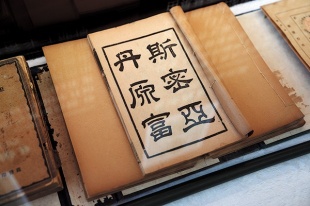
Yan had a solid educational background in both classical Chinese and modern Western thinking, and from the many books he read, chose and translated a variety of Western authors, including Thomas Henry Huxley, Adam Smith, John Stuart Mill, Montesquieu and Herbert Spencer.
He is also believed to have been the first scholar to have systematically introduced classical German philosophy — that of Georg Wilhelm Friedrich Hegel, to be specific — to Chinese youth.
In his monograph, In Search of Wealth and Power: Yen Fu and the West, historian Benjamin Schwartz of the United States describes Yan's effort as one to "find the true secret of Western wealth and power", and in the introduction, US political scientist Louis Hartz presents Yan as "a new foreign observer of Western thought as a whole".
Yan lived at a time when the feudal Qing Dynasty (1644-1911) was being shaken by Western powers, and intellectuals were struggling to seek a way out and ensure the country could survive, maintain its independence and prosper.
He also emphasized the need to improve the physical strength, moral standards and education levels of individuals, and was once in charge of then avant-garde universities including today's Peking University and Shanghai's Fudan University.
Apparently, Yan's endeavors meant something, as he prioritized the science, technology, social and political theories of the West as key references for rescuing his then impoverished and weak homeland.
Max Ko-wu Huang, a historian from Taiwan, believes that Yan's introduction to Western thought comprised four interconnected parts — scientific concepts based on logical reasoning, political ideology based on liberal democracy, capitalist economic theory, as well as social doctrine centered on the theory of evolution.
However, Yan was also aware of the destructive side of Western civilization and was cautious about the trend toward wholesale Westernization prevailing in the country at the time. To the contrary, the great thinker raised his voice in support of the quintessence of traditional Chinese culture, and insisted that China's survival would ultimately depend on its millennia-long civilization.
In October 1921, when he realized he was dying, he said in his will to his family: "You should know, China will not perish. Its existing traditions will be reformed, but should not be dropped completely."
In retrospect, Yan's words and deeds had their limitations, but it's still fair to say that he was ahead of his time.
Historically, influential figures with different political views and from different parties, like Liang Qichao, Cai Yuanpei, Hu Shi and Mao Zedong, all spoke highly of him and his contributions.
During his period of leadership in the city of Fuzhou and later at the provincial level in Fujian, President Xi Jinping placed great importance on the study and promotion of Yan's thinking.
In December 1997, Xi commended Yan for his "rigorous scholarship, pioneering reform, pursuit of truth, patriotism and efforts to revitalize the nation". In November 2001, he praised his patriotic sentiments and enlightened thinking, stating that, "to this day, Yan's idea of science and patriotism remains relevant". In 2021, he paid a visit to the thinker's former residence in Sanfang Qixiang, or the Three Lanes and Seven Alleys area of Fuzhou, to mark the 100th anniversary of Yan's death.
In 1920, Yan wrote a poem to celebrate his grandson's birth. The last sentence goes, "when our country has got peace and prosperity, don't forget to come to my grave and tell me".