Paving the way for an inclusive intl order









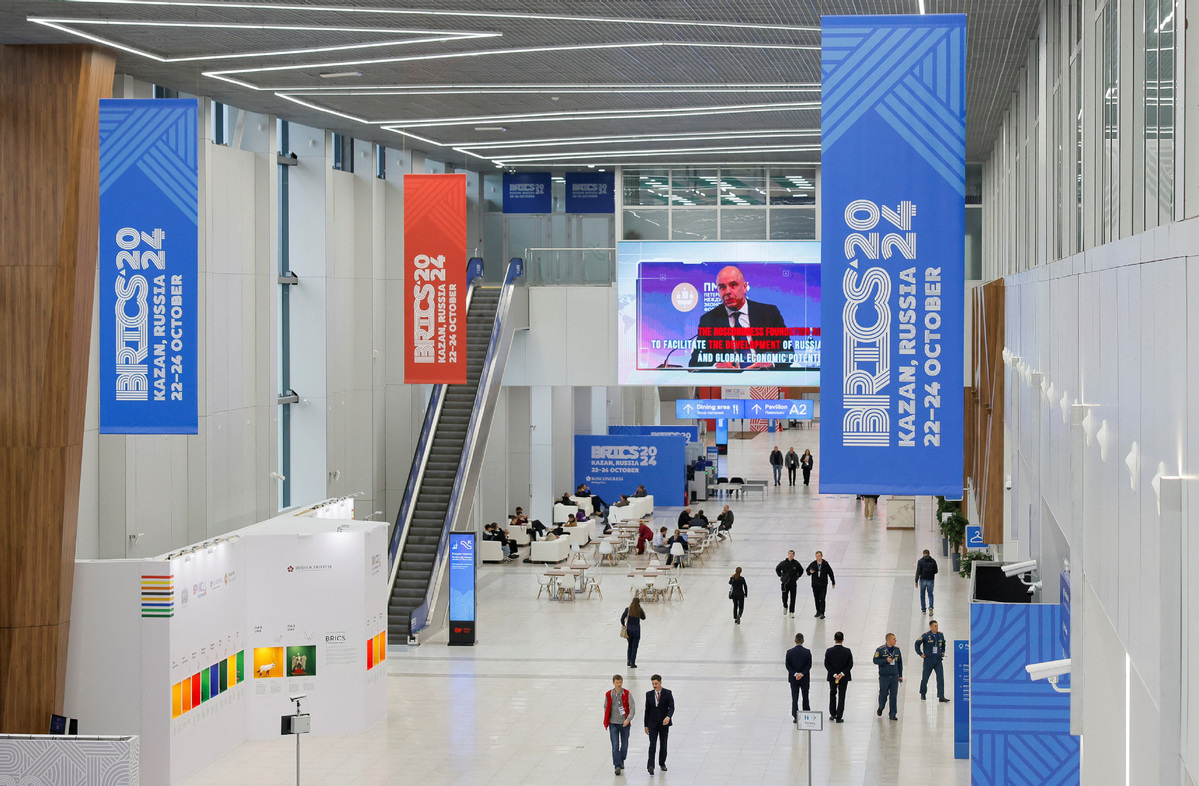
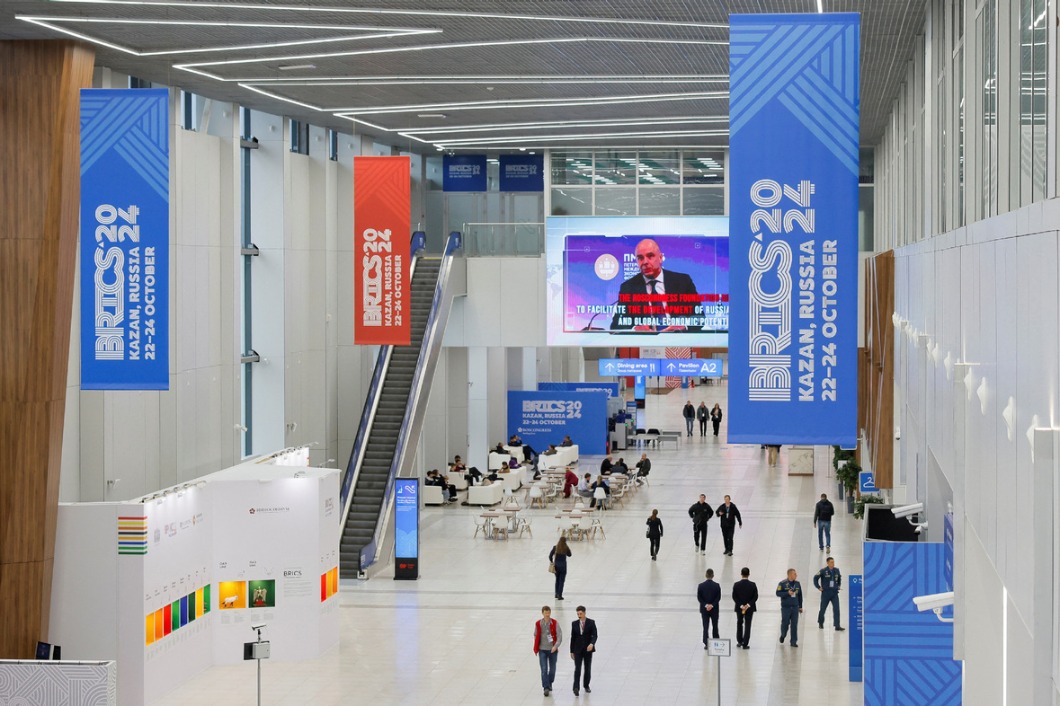
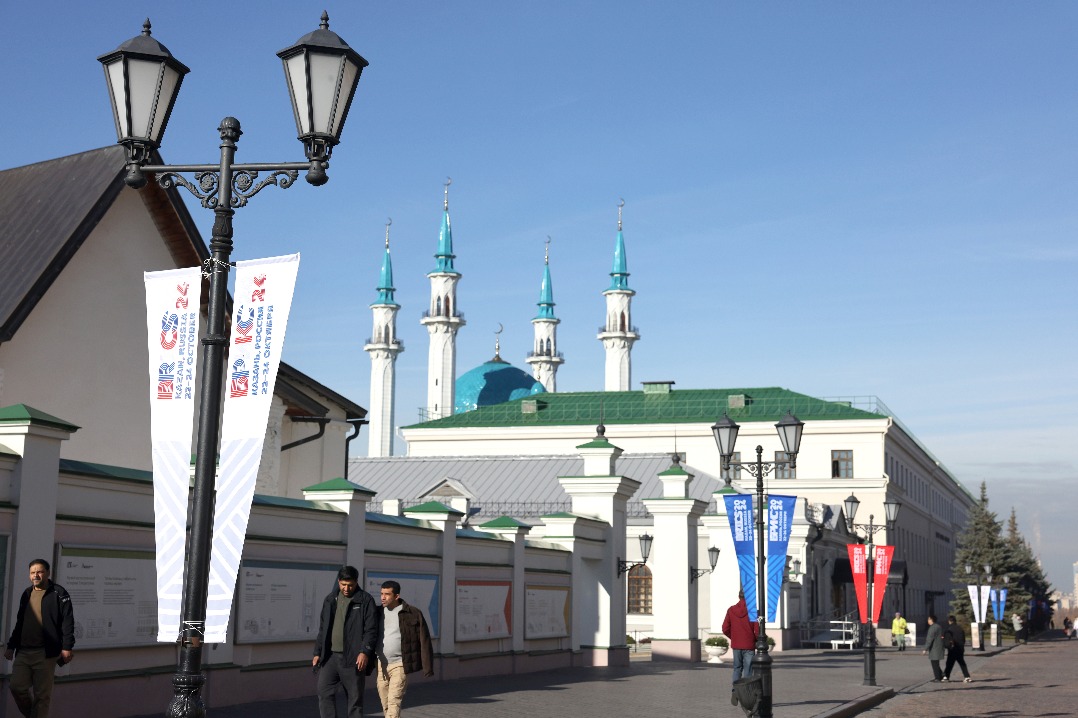
The 16th BRICS Summit will take place in Kazan, Russia from Tuesday to Thursday. The meeting, the first of its kind since the group's expansion, will have leaders from the new member countries join the discussions. Invited by Russian President Vladimir Putin, countries including Venezuela, Malaysia, Bolivia and Mongolia are also expected to participate as guests to follow the discussions.
This year, several meetings have been held covering crucial themes such as finance, climate change, health cooperation, women's and youth rights, intellectual property, etc. The induction of new countries as members and the interest expressed by others in joining BRICS prove the cooperation mechanism's vitality and potential. BRICS promotes multilateralism and advocates a fairer and more inclusive international order that reflects the political, demographic and economic weight of the countries of the Global South.
The 16th summit is taking place at a very challenging time, amid political and military instability in many corners of the world, such as Eastern Europe and the Middle East. Here it is worth highlighting Brazil and China's commitment to seeking peaceful and fair solutions to the conflict in Ukraine. On September 27, a ministerial meeting of the "Friends for Peace "group was held on the Ukraine crisis at the United Nations headquarters in New York. The meeting was co-chaired by Chinese Foreign Minister Wang Yi, Brazilian Foreign Minister Mauro Vieira and Chief Adviser of the Presidency of Brazil Celso Amorim. Representatives from many Global South countries were present, including South Africa, Saudi Arabia, Algeria, Azerbaijan, Bolivia, Kazakhstan, Colombia, Egypt, Ethiopia, the United Arab Emirates, Indonesia, Malaysia, Mexico, Nigeria, Kenya, Senegal, Thailand, Vietnam and Zambia.
One topic that is attracting much attention in the Western media is cooperation in financial matters among the BRICS members. The priorities of the Russian presidency include enhancing the role of BRICS states in the international monetary and financial system, developing inter-bank cooperation, providing assistance in transforming the international payments system, expanding the use of national currencies of BRICS states in mutual trade; and strengthening cooperation on the use of payment systems and financial technologies.
In the financial sector, BRICS made its mark first in 2014 when it announced the creation of the Contingent Reserve Fund and the New Development Bank. The group also acted together in defense of greater democratization of the management of the International Monetary Fund and the World Bank. Brazil, India, Russia and South Africa are founding members of the Asian Infrastructure Investment Bank, an idea developed by the Chinese government. In addition to the management and creation of new financial institutions, the BRICS is advancing in creating a new monetary paradigm, one of the priorities of the Russian presidency, with which the governments of the other member countries agree. Intra-BRICS trade using local currencies is a reality and will be boosted in the coming years.
During the first working session of the BRICS Ministers of Foreign Affairs Meeting earlier this July, Brazilian Foreign Minister Vieira echoed that Brazil expected the new members to be fully engaged in the internationalization of local currencies, payment instruments and platforms, an important topic raised by Brazilian President Luiz Inacio Lula da Silva in Johannesburg and a primary concern for Brazil's BRICS presidency next year, too.
Greater monetary autonomy is crucial for developing countries in the Global South as the exorbitant privilege of the US dollar is a major constraint on monetary policy worldwide. Changes in the Fed's interest rates affect exchange rates worldwide, as do the various sanctions imposed against countries and companies that restrict the use of the dollar and SWIFT payment system. As the BRICS advances, the United States elite fears losing its enormous discretionary power.
US presidential candidate Donald Trump has compared the loss of dollar hegemony to defeat in a revolutionary war. During a rally in Wisconsin on September 7, Trump stated: "Many countries are leaving the dollar. They are not going to leave the dollar with me. I'll say, you leave the dollar, you're not doing business with the United States because we're going to put a 100 percent tariff on your goods."
Despite the coercive pressure from the Washington elite, the process of dedollarization is already underway and inexorable. India and Russia, for example, have doubled their payments in national currencies (rupee-rouble) since 2023, despite US and European Union sanctions. The same occurs with China and Russia. Saudi Arabia, one of the largest oil exporters to China, signed a three-year currency swap with Beijing in November 2023 worth the equivalent of $6.93 billion. Brazilian companies have started to use the RMB to export to China.
The next BRICS Summit is expected to bring deep outcomes. The Brazilian government sees building new platforms on financial and monetary issues essential to advancing economic cooperation among the BRICS countries. As a result, practical measures are expected to be adopted, especially by countries with more extensive reserves and balance of payments surpluses, such as China, Saudi Arabia and the United Arab Emirates.
At this point, China is well positioned to lead this process, as it is the only member with an international reserve currency that is part of the IMF's Special Drawing Rights and the most successful international payments system in the Global South, the Cross-border Interbank Payment System. In addition, it is necessary to consider restructuring the New Development Bank to incorporate the new BRICS members into the institution's governance and provide a new source of resources to the NDB's cash flow.
The foundations of multilateralism are being laid. The road is long, the will is strong, and the BRICS countries are firmly paving the way to build an inclusive and open international order.
The author is a professor of international political economy at Sao Paulo State University in Brazil. The author contributed this article to China Watch, a think tank powered by China Daily. The views do not necessarily reflect those of China Daily.