Jimmy Carter's legacy vital for improving China-US ties









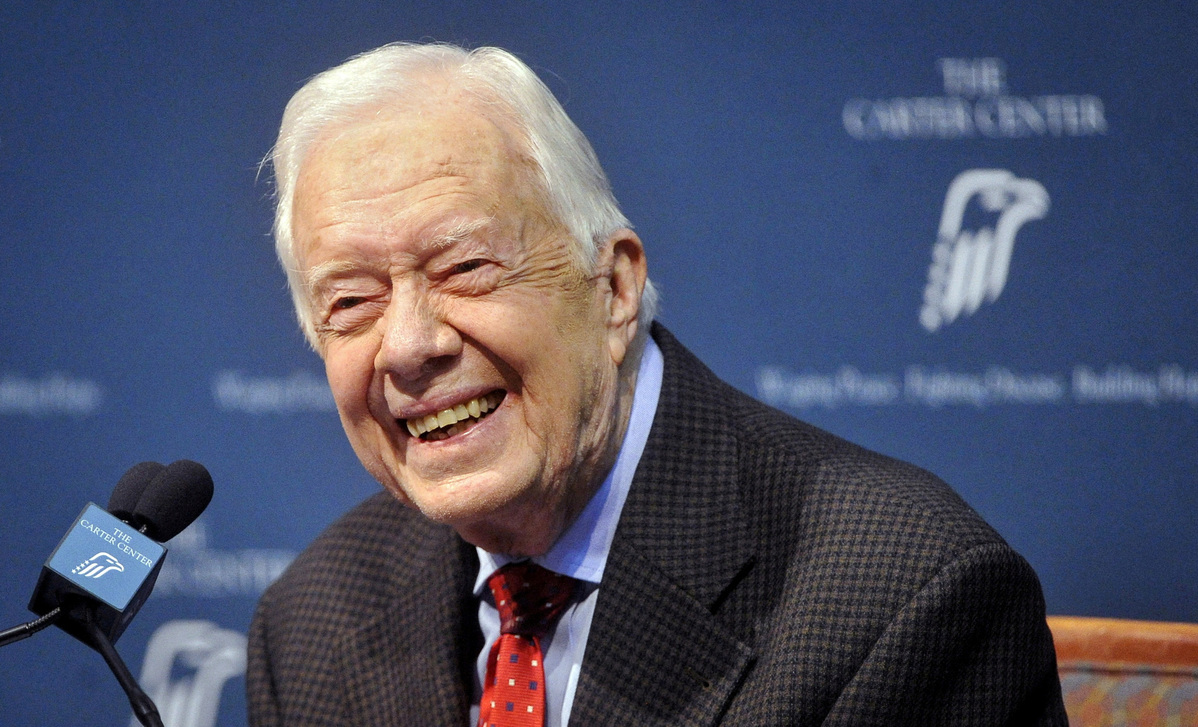
Former US president Jimmy Carter passed away at the age of 100 on Dec 29 at a time when the world is threatened by ongoing regional conflicts, and there is talk of World War III and even a nuclear war. Carter devoted much of his life to maintaining peace and promoting reconciliation, which included the Camp David Accords signed in September 1978 that brokered peace between Egypt and Israel.
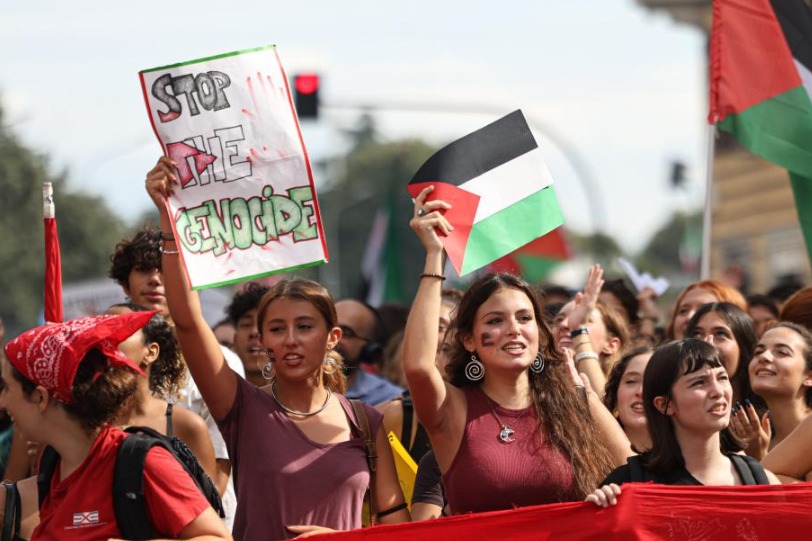
His 2006 book Palestine: Peace Not Apartheid, showed that he was not afraid of criticizing the United States' closest ally, in sharp contrast to US politicians today who have, wittingly or otherwise, endorsed the atrocities committed in the Gaza Strip during the past 14 months.
Carter wanted to do the right things. For example, he signed treaties with Panama's leader in 1977 to gradually hand over the control of the Panama Canal to the Latin American country despite the criticism of Republican politician Ronald Reagan.
Some US politicians disagree with Carter even today. Just days before his passing, US president-elect Donald Trump, to the surprise of the entire world, said the US should retake the Panama Canal.
Carter's most significant achievement was his announcement on Dec 15, 1978, that the US and the People's Republic of China had agreed to establish diplomatic ties on Jan 1, 1979. He emphasized that the US recognized the government of the PRC as the sole legal government of China.
That announcement led to bilateral exchanges at an unprecedented pace, benefiting the people of both countries for decades. Carter's contribution to China-US relations even after his presidency ended was remarkable. He made multiple trips to China after leaving the White House, trips that also took him to many rural areas where the Carter Center was engaged in a village election project. He met all the top Chinese leaders since Deng Xiaoping.
Carter and his wife Rosalynn went to areas hit by the 2008 Wenchuan earthquake in Sichuan province in November 2009 to promote Habitat for Humanity, a project for building houses for the needy. I was in Sichuan's quake-struck area six months earlier, joining a short-term volunteer teaching program.
Carter's rich experience in China enabled him to develop an all-round understanding of China and its 1.4 billion people, an experience that few other US politicians had. When Carter told a seminar that "you can tell I love the Chinese people", he really meant it. He was happy about China's phenomenal growth, in sharp contrast to the current US leaders who have been fear-mongering about China and desperately trying to contain China's rise.
Carter never framed US-China relations as confrontational or adversarial like today's US leaders. When I approached him through the Carter Center in 2016, he wrote a beautiful congratulatory letter for the 35th anniversary of China Daily's launch. In the letter, Carter said that working with Deng "to normalize the US-China relationship was one of the most significant diplomatic achievements of my political career, and it is with great pride that I have watched this relationship grow stronger".
He praised China Daily for playing an important role in that by informing Americans in the US and China about the progress China's reform and opening-up had made and reminding them of the importance of the US-China bilateral relationship.
I was fortunate to meet him in person in 2015 at a signing of his book A Full Life: Reflections at Ninety, at the Politics and Prose bookstore in Washington. He autographed the book for me and then looked at me with a smile for a while, a smile that still lives in my memory. I did click photos of him signing the book but I later regretted not asking for a photo together simply because I was concerned about the long line of people behind me.
Carter might be a controversial president to some in Washington, but throughout his life, he helped unite people and countries in the world, especially the two largest economies. It is clear he was against the current hostile US policies toward China.
The author is chief of China Daily EU Bureau based in Brussels.
chenweihua@chinadaily.com.cn