Yarlung Zangbo project conducive to basin governance









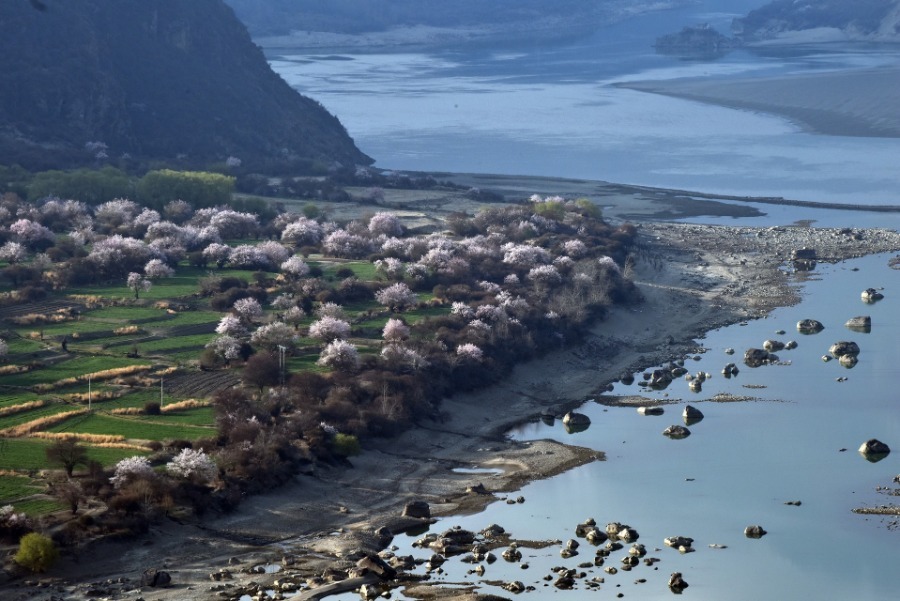
Yarlung Zangbo-Brahmaputra-Jamuna River, flowing through China, India and Bangladesh, is one of the rivers with the most abundant water volume in the world. Warm and humid air flow, blocked by the Himalaya Mountains, turns into abundant rainfall in the Brahmaputra-Jamuna River section. More than half of the water volume flowing from China to downstream countries discharges into the Brahmaputra River, all the way through the Danba Qu River and the Xibaxia Qu River. Moreover, the project itself does not consume water. The hydropower development on the downstream of the Yarlung Zangbo River bears no negative impact to total water volume of the basin, as it generates power by taking advantage of gravity. After completion, the project will make the annual distribution of river run-off more even, which will be beneficial for the development of the water resources and disaster prevention of downstream countries.
During recent years, amid accelerating climate change, extreme weather events have been occurring more frequently globally, with higher intensity and wider impact. The middle and downstream sections of the Yarlung Zangbo-Brahmaputra-Jamuna River are home to hundreds of millions of people. Better developing and conserving the Yarlung Zangbo-Brahmaputra-Jamuna River, and enhancing the basin governance are key to adapting to climate change, eliminating poverty, improving livelihoods, stepping up economic growth, and preventing floods and droughts along the river.
The practices conform to the international conventions of trans-border river development and conservation, and serve the common interests of riparian countries. Hydropower development in the downstream of the Yarlung Zangbo River is a pragmatic action out of the actual needs of adapting to climate change, honoring the carbon peaking and carbon neutrality goals, promoting green-oriented energy transition, and social and economic development. It is also in line with the rights of survival and development of people in upstream areas.
China, as one of leading countries in dam and hydropower technologies, has developed the world's most advanced and complete industry chain, and robust and sound technical standards system. China has always upheld a responsible attitude in hydropower development, adhering to the principles of scientific planning, comprehensive discussions, cautious decision-making and orderly development. It gives top priority to ecological conservation, pursues harmony between humanity and nature, balances high-quality development and security, fully considers the needs of hydropower development and ecological conservation, and fully accommodates possible impacts on downstream areas and the reasonable concerns of related countries.
Hydropower development of the downstream Yarlung Zangbo River is based on decades of comprehensive research and rigorous scientific arguments. It fully takes the geological environment into consideration and strictly abides by the law on ecological conservation on the Qinghai-Tibet Plateau. The development plan has avoided the high-risk geological disaster areas and major geological disaster chain in the basin, with project safety and ecological protection measures clarified. Therefore, the project will have no negative impact on downstream areas.
On the contrary, it will be conducive to the governance of the river basin and mutually beneficial and win-win cooperation among riparian countries. Along with project development, China is also establishing and improving the meteorological, hydrological, geological disaster monitoring systems for the basin, making disaster early warning and forecasting even more precise and real-time oriented, thus strengthening disaster prevention and reduction capabilities of the downstream areas. After completion, the project will benefit the relevant riparian countries by regulating excessive water during wet seasons and replenishing water sources during dry months.
The Chinese government has always attached great importance to trans-border river cooperation, and has established practical and effective transborder river cooperation mechanisms. Fruitful exchanges and cooperation have been carried out in flood and drought disaster prevention, hydrological information sharing, joint scientific research and trans-border river project construction, contributing to regional development and stability.
For decades, through various cooperation mechanisms, China has been sharing flood season hydrological information with neighboring countries, briefing floods, droughts and other emergency event information, jointly building and operating trans-border river projects to high standards. The country has carried out international cooperation in emergency management and disaster relief, worked with downstream countries to minimize the risks and losses of floods and droughts. These efforts have safeguarded people's lives and property, and have been highly appreciated and recognized by related countries and international institutions.
In the construction and operation of the hydropower development on the downstream of the Yarlung Zangbo River, China will keep in close contact with downstream countries in disaster prevention and reduction, and keep the benefit of riparian people in mind.
The author is vice-president and secretary-general of Chinese National Committee on Large Dams, and honorary president of the International Commission on Large Dams.
The views don't necessarily represent those of China Daily.
If you have a specific expertise, or would like to share your thought about our stories, then send us your writings at opinion@chinadaily.com.cn, and comment@chinadaily.com.cn.