Military brinkmanship in Asia will not make US great again: China Daily editorial









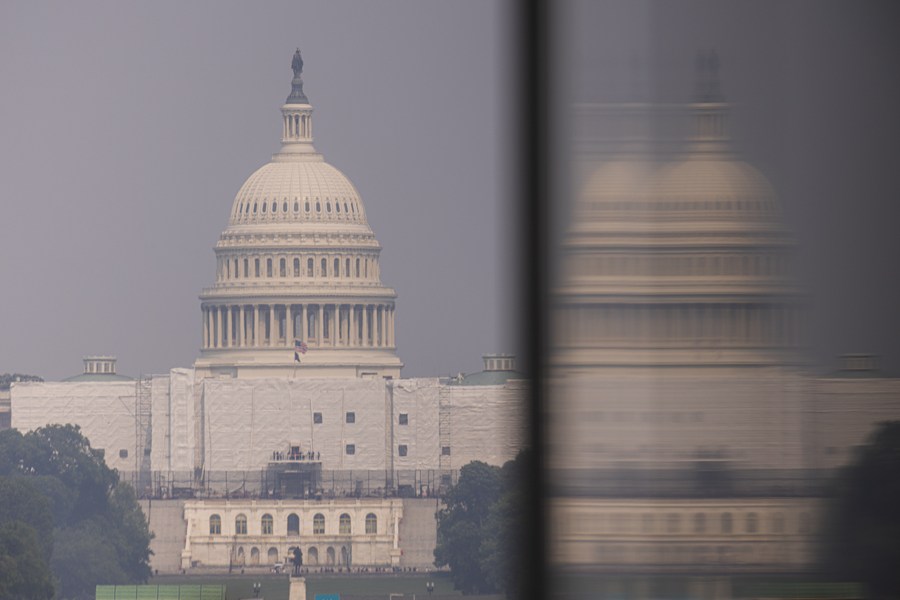
Way back when, the Roman historian Titus Livius observed that men have an innate desire to propagate rumors or reports. US Secretary of Defense Pete Hegseth, whose confirmation hearing showed he could talk the talk about "warfighting, lethality, meritocracy, standards, and readiness" but had little grasp of the military complexities involved in walking that talk, has shown that what's true of the past is true of today.
Recent revelations from The Washington Post regarding a Pentagon internal guidance memo, bearing his signature, have once again highlighted the United States' fixation on China as its primary strategic competitor, and the lack of new thinking, flexibility and forethought in its approach.
Since the US leader's first term in office, the US has explicitly framed China as its principal long-term challenge, a stance that is reaffirmed in this latest memo, which designates China as the Pentagon's "sole pacing threat" and which, ignoring the actuality that Taiwan is an inalienable part of Chinese territory, posits the island as a focal point for military contingency planning.
What is striking about the memo is its suggestion that the US' European allies handle the "threat from Moscow" while the US shifts its focus to Asia — This should pull any vestiges of wool from the eyes of the European leaders who might still harbor some hope that the US will strengthen the European security umbrella.
It exemplifies Washington's transactional approach to alliances. Rather than fostering collective security, the US is willing to exploit its partners, diverting resources to confront China at the expense of European stability. This aligns with the recent efforts of the US to strengthen military ties with Japan and the Philippines — moves that are less about regional security and stability and more about encircling China as part of the US' containment strategy.
The Pentagon memo underscores a troubling reality: US policymakers remain trapped in a zero-sum mindset, viewing China's development as a threat rather than an opportunity for cooperation. The US intelligence community's alarmist reports about China's military capabilities only serve to drive Washington's own militarization of the Asia-Pacific — a strategy that benefits US arms manufacturers rather than regional security.
Under the Enhanced Defense Cooperation Agreement with the Philippines, the US is building new facilities at five additional bases in the country, including near Taiwan and in the South China Sea, as well as conducting large-scale drills with Philippine forces, including simulated island retaking. It is also upgrading its military bases in Japan, including for a new Marine Littoral Regiment for island warfare.
In fact, the US is significantly expanding its military footprint in the Asia-Pacific region — with more carrier strike group patrols and more Virginia-class and Los Angeles-class subs operating near China — and reinforcing those of its allies with the deployment of missile systems, such as the Typhon Missile System in the Philippines, Aegis Ashore in Japan and THAAD in the Republic of Korea.
Nonetheless, for Taiwan's secessionist Democratic Progressive Party authorities, the memo should be cause for caution, not celebration. The US "security guarantee" is unreliable, and the US has a long history of leveraging Taiwan as a pawn in its strategic competition with China, pressuring the island to increase defense spending on US weaponry — effectively turning it into a cash cow for the US.
The US' military brinkmanship only runs counter to regional stability and economic interdependence and thus the interests of all people in the region. Instead of stoking tensions, the US should engage in constructive dialogue, respect China's core interests and contribute to regional stability, which it can do in a number of ways. The alternative — escalating confrontation — will only lead to greater instability, with consequences the US can ill afford.
Unlike the US, which thrives on division and conflict to sustain its hegemony, China seeks regional stability and mutual development. The Chinese government's stance is clear: the Taiwan question is China's internal affair, not a bargaining chip for geopolitical games, and its commitment to peaceful reunification remains unwavering unless it is compelled to use force.
By abandoning its zero-sum competition with China, and adopting a less militarized, more economically inclusive, and climate-focused strategy, the US could play a constructive, rather than destructive, role in Asia by contributing to its stability, economic cooperation, and sustainable development.