Economies, unite to defeat US' tariff war









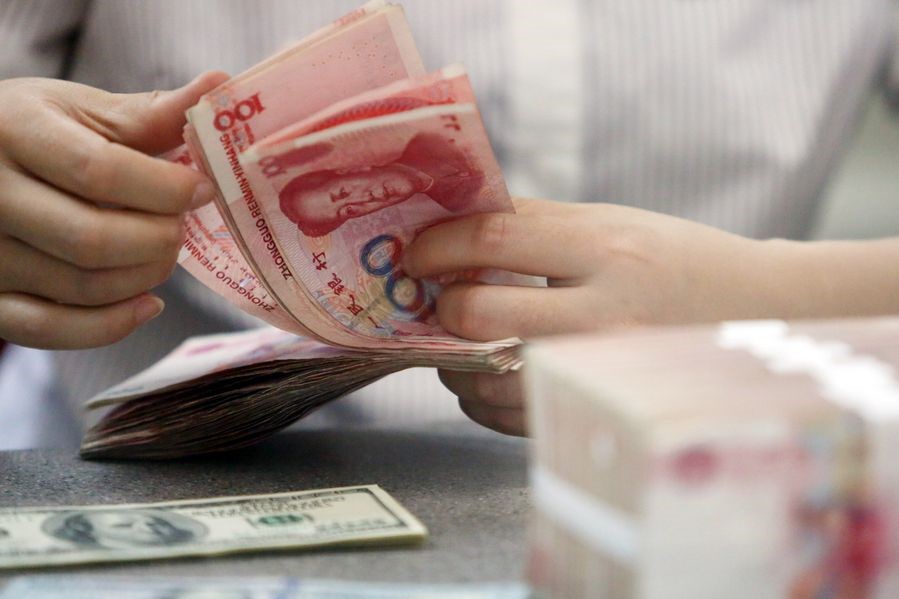
US President Donald Trump declared April 2 as "Liberation Day" for the United States. For the rest of the world, however, April 2 may be remembered as the day the US administration dropped an economic "nuclear bomb".
The US' tariff strategy is nothing but an aggressive attempt to extract global economic rent by leveraging its central position in the global political architecture and as a still substantial market power. The US tariff rate on Chinese imports now effectively totals 145 percent. It is a coercive approach aimed at addressing long-standing structural issues in the US economy — rising debt and deindustrialization — by shifting the costs onto the global economy.
The repercussions of the US' tariff strategy will unfold over the coming months. In particular, developing economies will have to bear the brunt of the US' belligerent move in the shape of a wave of bankruptcies, job losses and poverty uptick. What is especially troubling is that the US' ability to extract these costs from the rest of the world does not stem from its overwhelming dominance of the markets. Rather, it reflects a deeper problem: other economies are trapped in a classic prisoner's dilemma.
The classic prisoner's dilemma in game theory illustrates a paradox: even when cooperation would benefit all parties, the absence of trust and coordination drives each player to act in its self-interest, leaving everyone worse off.
Take merchandise trade for example. The US remains the world's largest importer. Its imports in 2023 amounted to about $2.98 trillion, accounting for 16 percent of the global total. The European Union is not far behind, importing goods worth $2.72 trillion, or 15 percent of the global total. China's merchandise imports stood at $2.14 trillion, or 12 percent of the global total.
If merchandise and services are combined, the EU would be the world's largest importer. In 2023, the EU's total imports (excluding intra-EU trade) amounted to $4.10 trillion, more than the US' $4.05 trillion. China followed with $3.28 trillion. In other words, the US' imports were 55 percent of the combined imports of the EU and China.
The EU also leads in overall trade volume. In 2023, the EU's total trade in goods and services reached $8.63 trillion, $1.36 trillion more than the US' total. Beyond these three major players, Japan, the United Kingdom, India, Canada, Mexico and the Republic of Korea each account for 3 to 4 percent of global goods imports. Combined, their merchandise imports account for 21 percent of the global total. And if services are included, their 2023 imports would be worth $5.33 trillion, 1.3 times that of the US'.
These figures highlight a crucial point: if the rest of the world's major economies coordinated an effective counterstrategy — imposing reciprocal tariffs or taking retaliatory trade measures — they would leave the US with no choice but to abandon its aggressive tariff strategy. Given that one-fourth of the US' GDP in 2023 depended on trade — with goods and services exports comprising 11 percent — the country, like any other major economy, relies heavily on global trade for economic growth and prosperity.
The idea of coordinated retaliation may sound radical, akin to mutually assured destruction in a nuclear standoff. But just as nuclear deterrence depends on "balance of terror" to prevent conflict, global trade stability relies on a credible balance of power to discourage economic coercion by any country.
What the US administration likely fears most is not the retaliatory actions of individual countries, but the emergence of a unified front against its tariff strategy. And only a unified front of economies could force the US to back down from its aggressive tariff stance or risk a domestic political backlash from voters affected by the consequences of a global retaliation.
Unfortunately, the opposite is happening. The EU, the world's largest trading economy, remains almost paralyzed, grappling with the fallout of the Russia-Ukraine conflict, escalating tensions in the Middle East, and now tariff coercion. EU member states, through their actions, have been undermining, instead of supporting, each other, while politicians in Brussels, preoccupied with their own narrow agendas, hold rounds after rounds of inconclusive meetings.
China, the primary target of the US tariffs, refuses to be cowed by the US going ballistic on tariffs. Sadly, other economies appear hesitant, if not resigned to their fate, to take retaliatory actions against the US. In fact, some have already raised the white flag.
The result is tragic. Much like the players in a classic prisoner's dilemma, governments around the world, constrained by mistrust and divergent interests, have failed to align their responses. As a result, they risk ceding the hard-won economic gains by their people and exposing themselves to a prolonged period of trade uncertainty and thus losing out in their pursuit of a brighter future.
The author is a researcher at the Lujiazui International Institute of Finance, China Europe International Business School. The views don't necessarily reflect those of China Daily.
If you have a specific expertise, or would like to share your thought about our stories, then send us your writings at opinion@chinadaily.com.cn, and comment@chinadaily.com.cn.