Neighbors building a shared future together










SHI YU/CHINA DAILY
The Chinese leader's selection of Vietnam, Malaysia, and Cambodia for visits after the Central Conference on Work Related to Neighboring Countries underscores Beijing's emphasis on fostering cooperation with Southeast Asian countries. This engagement aligns with a new era of neighborhood diplomacy, characterized by a more pragmatic and comprehensive approach. The focus on strengthening ties with neighboring countries is expanding the scope of cooperation between China and Southeast Asian countries.
Both sides recognize the importance of political cooperation in strengthening and further developing relations, particularly through regular high-level meetings. In essence, cooperation is being strengthened on the foundation of steadily growing political trust between China and individual Southeast Asian countries. The realm of practical cooperation is also widening. Key areas include trade, investment, infrastructure connectivity and so on within the framework of the Belt and Road Initiative.
Current geopolitical shifts and the imposition of tariffs by major powers are driving Southeast Asian countries to enhance cooperation with China in order to diversify markets and mitigate risks. Furthermore, collaboration with China is seen by Southeast Asian businesses as an opportunity to adjust business models, improve corporate governance, and meet the rising demands of the Chinese market, while capitalizing on China's increased efforts to attract foreign investment.
Infrastructure development, including railway connectivity, is emerging as a key trend. An increasing number of Southeast Asian countries are willing to boost railway cooperation projects with China. The future is likely to see the emergence of railway networks that not only connect every single Southeast Asian country but also China and Southeast Asian countries. Those networks have the potential to support Southeast Asian countries diversify their transportation routes, reaching not only the Chinese market but also other international markets, including Europe.
In addition, the promotion of two-way investment between China and Southeast Asian countries is also expanding. China is increasing its investment projects under the Belt and Road Initiative and actively seeking investment from Southeast Asian countries. Significantly, during President Xi Jinping's official visits to Vietnam, Malaysia, and Cambodia, investors from many regions including these three countries participated in the China International Consumer Products Expo in Haikou, reaffirming China's continued attractiveness as a promising market for foreign investors, including investors from Southeast Asia.
The room for technological cooperation between China and Southeast Asian countries has also broadened further, as the demand for such cooperation and talent education is growing. China's leading role in high-tech fields, demonstrated by its achievements in areas like artificial intelligence and humanoid robots, is largely attributed to its effective policies for nurturing, training, and attracting technological talent.
China is promoting the application of science and technology across various aspects of its socio-economic life. Currently, Southeast Asian countries also have a strong demand for cooperation in high-tech development and the training of science and technology professionals. Tech firms in Southeast Asia suggest that Chinese technology may be well-suited to their requirements.
At the same time, the pattern of Chinese technology development might hold lessons for them. The leader of FPT, a tech giant in Vietnam, said "FPT will develop AI models similar to DeepSeek, designed for specific areas and industries". Taken together, high-tech cooperation is considered a bright spot in the relationship between China and its neighboring countries. This was emphasized by To Lam, general secretary of the Communist Party of Vietnam Central Committee, in his meeting with the visiting Chinese leader on April 14, and in many agreements signed between China and Vietnam, Malaysia, and Cambodia during Xi's official visits to those countries.
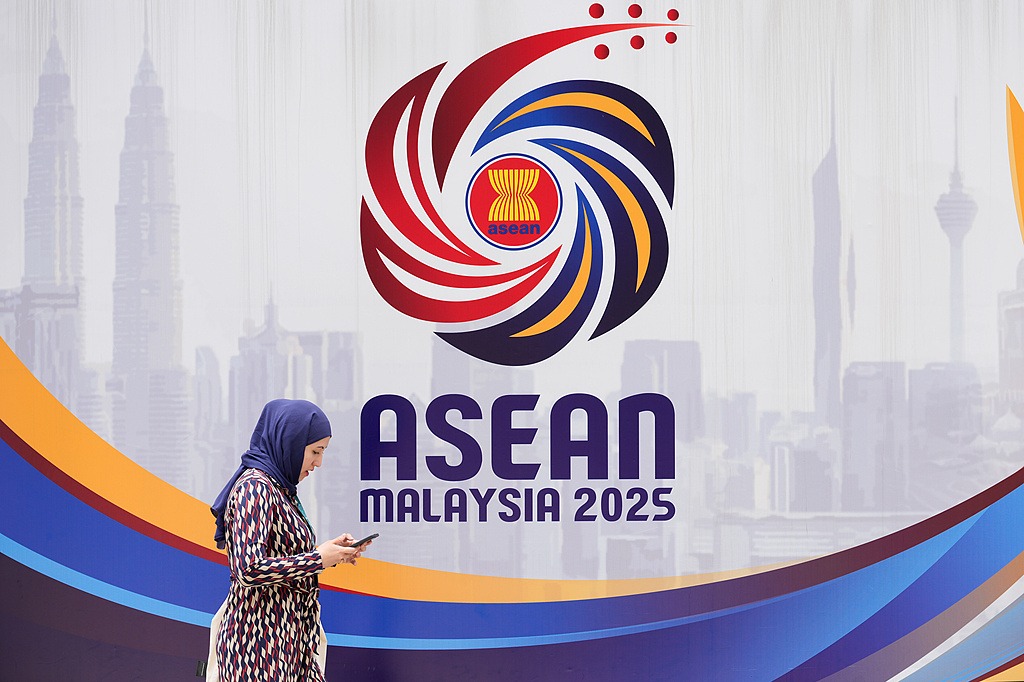
China and Southeast Asian countries are also diversifying their cooperation within multilateral frameworks, extending beyond China-ASEAN collaboration to include mechanisms like BRICS, RCEP and so on. China and ASEAN countries both believe in promoting the high-quality implementation of RCEP and swiftly concluding negotiations on the ASEAN-China Free Trade Area 3.0.
Simultaneously, China and ASEAN countries affirm strengthening coordination and multilateral cooperation in line with the building of a community with a shared future between China and each individual ASEAN country. That is why China and Southeast Asian countries reaffirmed to defend the international system with all the countries as its core, the international order with international law as its foundation and the adherence to the Five Principles of Peaceful Coexistence and the basic norms of international relations as the cornerstone. Such shared understandings between China and Southeast Asian countries can assist both in navigating the uncertainty, instability, and unpredictability of the international environment.
The author is a research fellow at the Institute of Asia-Pacific Studies, Vietnam Academy of Social Sciences.
The views don't necessarily reflect those of China Daily and the author's institute.
If you have a specific expertise, or would like to share your thought about our stories, then send us your writings at opinion@chinadaily.com.cn, and comment@chinadaily.com.cn.