Recalibration of US-China relations is must for stable global governance









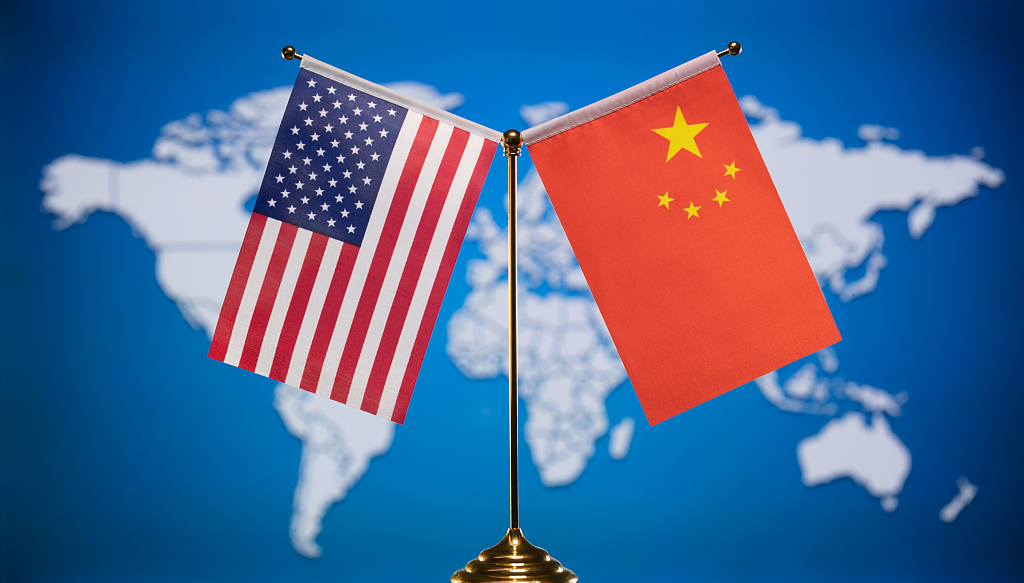
The recalibration of US-China relations is both a strategic imperative and a prerequisite for the long-term stability and efficacy of global governance. The competition and cooperation between the two most dominant actors in the international system economically, militarily, and technologically, significantly affect multilateral institutions, global standards, and collective solutions to global challenges.
The present trajectory of US-China relations, characterized by rivalry, mutual distrust, and strategic decoupling, has not only undermined bilateral relations but also diminished the efficacy of global institutions including the United Nations, World Trade Organization (WTO), World Health Organization (WHO), and climate governance frameworks.
The competition between great powers is not unprecedented; however, the US-China dynamics are distinguished by the magnitude, intricacy, and systemic repercussions. In the absence of a measured recalibration characterized not by the eradication of competition, but by its pragmatic management, global governance risks becoming progressively fragmented, polarized, and ineffective in tackling pressing global challenges such as climate change, pandemics, nuclear proliferation, and cybersecurity.
A primary justification for recalibration is the shift in the international order from a unipolar to a multipolar configuration. China's Belt and Road Initiative (BRI), the creation of institutions such as the Asian Infrastructure Investment Bank (AIIB), and its proactive diplomatic engagement in forums like BRICS and the Shanghai Cooperation Organization (SCO) illustrate its rising stature and influence. The United States has responded with heightened suspicion and punitive measures, like tariffs, export restrictions, and the securitization of technology and data transfers. This competitive behavior has exacerbated a declining trust deficit, hindering the attainment of consensus on global norms and standards.
The global governance framework is being challenged by transnational issues necessitating collective action, which is nearly unattainable without at least modest cooperation between Washington and Beijing. The absence of cooperation at a time of mutual vulnerability highlighted the pressing necessity for a formal discussion between the two great powers over global health governance, data exchange, and public health infrastructure. Climate change necessitates a more pressing need for recalibration.
Economic interdependence regarded as a stabilizing element, has evolved into a double-edged sword in US-China ties. Trade, investment, and supply chain interconnectedness intricately link their economies, indicating shared incentives for stability. Conversely, economic interdependence has been exploited, by employing tariffs, sanctions, and investment restrictions as instruments of strategic advantage.
The rhetoric of decoupling, albeit partially realized, has engendered uncertainty in global markets, impeded technological collaboration, and compromised the WTO's tenets of open and rules-based commerce. This fragmentation diminishes efficiency and creativity while complicating the governance of global digital standards, cybersecurity, and intellectual property rights. A calibrated economic involvement, supported by new regulations, confidence-building initiatives, and dispute-resolution frameworks, is important to maintain the integrity of global economic governance.
Recalibrating US-China relations is not solely focused on enhancing bilateral contacts; it is an essential structural requirement for the protection and strengthening of global governance. In the absence of a stable and predictable framework for interaction between the two dominant powers, multilateral institutions would experience paralysis, international standards will transform into contested battlegrounds, and the world will gravitate towards heightened uncertainty. The international community has a genuine interest in promoting and enabling a US-China to reset their relations that prioritize responsible statecraft over competition.
In a world burdened by geopolitical tensions, economic instability, and pressing global issues ranging from climate change to artificial intelligence (AI), few relationships possess as much significance, potential, and risk as that between the United States and China.
Amid trade and tariff disputes and diplomatic distrust, it is easy to overlook the periods when the US and China collaborated to facilitate significant transformations. The normalization of relations in the 1970s contributed to the reconfiguration of the global order. Subsequently, China's entry into the World Trade Organization in 2001 facilitated China's economic ascent and concurrently opened new markets for American enterprises. The bilateral cooperation on global challenges has demonstrated the potential of this relationship.
China and the United States will not reach consensus on all matters; nor is it necessary for them to do so. The intrinsic differences in political systems, values, and strategic perspectives render friction unavoidable, however, dissent does not necessitate animosity. The shared commitment of the two presidents to the Geneva agreement and their acknowledgment of the progress achieved indicates a pragmatic trajectory ahead.
This is a delicate equilibrium that influences global financial markets, regional security in Asia, climate initiatives, artificial intelligence governance, and global health. Furthermore, revitalizing US-China cooperation could facilitate the restoration of multilateralism during a period when international institutions are burdened by nationalism and great-power competition.
For the purposes of world peace, security, and development, China and the US must maintain cooperation and enduring relations for strong global governance.
Waseem Ishaque is director China Studies Center, National University of Modern Languages (NUML) Islamabad, Pakistan. The views don't necessarily reflect those of China Daily.
If you have a specific expertise, or would like to share your thought about our stories, then send us your writings at opinion@chinadaily.com.cn, and comment@chinadaily.com.cn.