Beijing's support to address refugee crisis welcome









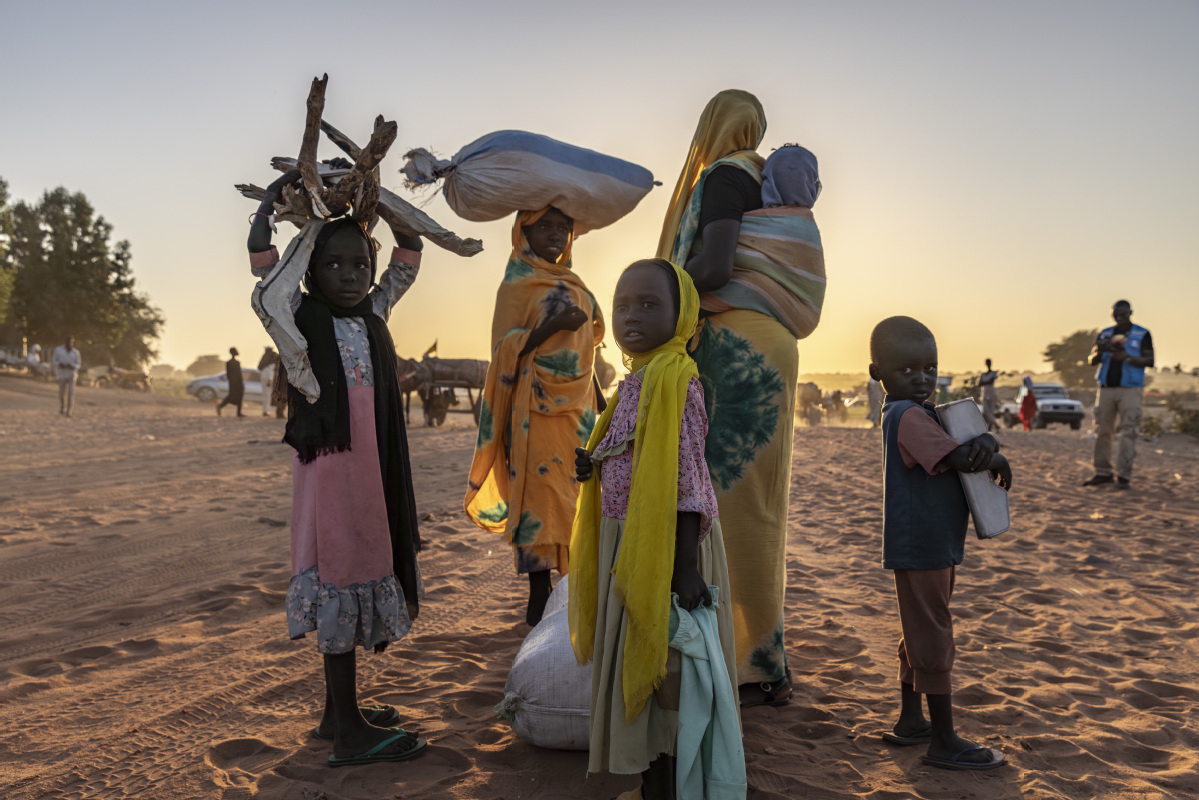
UNHCR, the UN Refugee Agency, is approaching the 75th year of its establishment. During this time, the increasing number of people being forcibly displaced in one crisis after another has become a regrettable trend in our world.
There were 122.1 million people forcibly displaced globally as of April 2025, twice as many as a decade ago. One in every 67 people on the planet is displaced. It is almost double the population of my own country, France.
Although the total increase in displacement has perhaps been lower than in previous years, let's not confuse a leveling in the data with genuine improvement in the plight of many of the world's most vulnerable.
Many have fled protracted and brutal conflicts in Myanmar, Gaza, Lebanon, the Democratic Republic of the Congo and Ukraine. Sudan is now the largest displacement crisis in the world, with over one-third of its population displaced.
These numbers hardly reflect the human realities behind them. For each one of the persons we account for, fleeing has been the only way to survive. Each one once had a home, a job, a school, a community, and lost it all through no fault of their own.
Today, more than ever, they need the guarantees of safety that the visionary states and statesmen and stateswomen who created the UNHCR in 1950 and the Refugee Convention in 1951 wanted them to have. At this time of critically high displacement, we also see funding for humanitarian aid being slashed. Refugees now face a double crisis: the trauma of exile, and the collapse of the support systems they depend on.
In 2015, the UNHCR received $3.4 billion in funding at a time when 64 million people had been displaced. A decade later, in 2025, in the face of nearly double the need, our budget is unchanged. Basic services like education, healthcare and food distribution are breaking down. Displaced communities are packed into overcrowded camps or dwellings, often in locations hardest hit by extreme weather.
Women and girls face disproportionate risks in this worsening landscape. While structures to protect people wither, reports of sexual violence, exploitation and abuse continue to rise. Sixty percent of displaced people remain within their own countries. Of those who do leave, the vast majority, 67 percent, flee only as far as the next country.
Low- and middle-income countries shoulder nearly three-quarters of the world's refugee population. Many of these countries have shown generosity for decades but are now sounding the alarm. They need solidarity. The principle of shared responsibility is being neglected.
The UNHCR continues to push for solutions. Last year, we saw the highest number of returns in decades. Nearly 9.8 million displaced people went back to their place of origin in 2024, including about 1.6 million refugees and over 8 million internally displaced people. These are not small numbers, and they reflect, in part, the deep human desire to return home. More than half a million Syrians have returned to their country, hopefully to rebuild their future despite returning to homes reduced to rubble.
Sadly, however, in too many instances, people are being forced to go back, not because conditions are now safe but because the countries that once welcomed them are now hit by their own conflicts, or are simply closing their doors. The promise of asylum is eroding.
So what can be done? I believe, together, we can do a lot.
We can further invest in solutions. Durable solutions such as resettlement, local integration and voluntary return are not just humanitarian goals, they are investments in regional and global stability. Such investments reduce long-term aid dependence, foster security and restore dignity. And they help avoid desperate, dangerous journeys.
Return is a demonstration of hope and reconciliation, but it is also fragile. When we support refugees to go back home, we help them to rebuild their communities, but for that we need investment in housing, schools, healthcare and livelihoods, otherwise their return risks becoming temporary and precarious, creating new vulnerabilities.
We also need to see an increase in emergency lifesaving assistance, because it has been dwindling. In the face of war, famine and disaster, the right to seek safety and have access to lifesaving aid must be solidly guaranteed.
Displacement is one of the defining challenges of our time. But it is not inevitable. Peace, justice and solidarity must guide our response. This is a moment to show strengthened commitment, not to back down.
China certainly has a role to play with its advantages in diplomacy, experience of rapid development and poverty reduction, its technical expertise, innovation and growing corporate footprint, its own human resources, and supply chains. Over the past decade, the UNHCR has welcomed the support of China Aid in helping respond to humanitarian needs in critical hotspots like Afghanistan as well as benefitted from young talents from China in the UNHCR's frontline work.
The private sector in China is also playing a pivotal role in enhancing the UNHCR's response. Through support in emergency response and long-term solutions — such as education, climate action, sports and livelihoods — the private sector in China contributes not only funding but also valuable expertise and innovation, strengthening the UNHCR's ability to deliver effective and sustainable aid.
China, of course, has a key role to play as a UN Security Council permanent member and its involvement in global affairs to foster peace and security, including with its peacekeeping commitments. China's efforts to support multilateralism, boost the environment for solutions taking into account people's aspirations for stability and equality, are needed. I welcome very much the country's commitment to the Global Compact on Refugees, an important framework to boost solidarity with host countries on the front line of the refugee response, ensuring better support to protect and assist refugees and others displaced by violence and conflict.
The author is the UNHCR Representative in China.
The views don't necessarily reflect those of China Daily.
If you have a specific expertise, or would like to share your thought about our stories, then send us your writings at opinion@chinadaily.com.cn, and comment@chinadaily.com.cn.