What kind of cooperation does Africa need from China?










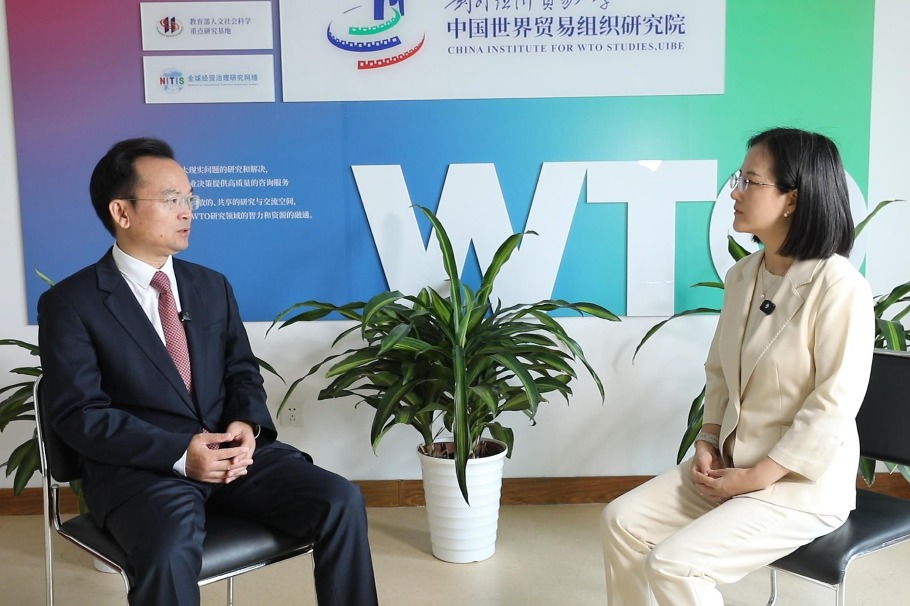
As a Zimbabwean by birth, I currently serve as CEO of The Southern African Times and founder of an advisory firm that connects African markets with international investors. During my most recent trip to Harare in September 2025, I had the privilege of meeting with His Excellency Zhou Ding, China's Ambassador to Zimbabwe. My primary goal was to gain a deeper understanding of how Chinese capital is shaping Africa's infrastructure, steel industry, and employment landscape.
Prior to this meeting, I had just led a group of UK-based investors on a tour of Botswana and South Africa to explore local growth opportunities. For me, the conversation with Ambassador Zhou was far more than a courtesy call: I wanted to look beyond the numbers to grasp the real impact of Chinese investment in Africa, ensuring that our reporting and investment advice remain impartial, evidence-based, and globally minded. Having grown up in a country long caught between opportunity and volatility, I understand better than most what foreign capital means for Africa. Yet the questions I sought to answer are not unique to Zimbabwe – Chinese capital has become a major driving force in Africa's infrastructure, mining, manufacturing, and energy sectors, making these issues relevant to the entire continent's investment landscape.
'Don't just focus on official numbers'
When discussing Chinese investment, employment is the most tangible outcome. Data from the Chamber of Chinese Enterprises in Zimbabwe shows over 100,000 locals are directly employed by Chinese-linked firms. This pattern repeats across Africa: in Ethiopia, Chinese-built industrial parks have created tens of thousands of jobs in textiles and light manufacturing; in Nigeria, Chinese-supported free trade zones have boosted employment by thousands more; and in Kenya, the Standard Gauge Railway (SGR) project hired massive numbers of local workers during construction.
However, these "on-the-record" figures have long been disputed — disaggregated labor data is scarce, and independent verification remains challenging.
More importantly, Africa's economies (especially Zimbabwe's) are heavily dominated by informal sectors. Often, the impact of Chinese capital is not felt in formal jobs, but in the small, everyday businesses that line our streets: at Harare's Mbare Musika, Johannesburg's China Mall, and Lusaka's Kamwala market, local vendors rely almost entirely on Chinese supply chains for clothing, electronics, and building materials. Their livelihoods are not counted in foreign investment statistics, yet they depend entirely on these Chinese-linked trade networks. This "formal jobs + informal spillover" dynamic makes measuring impact both difficult and essential.
Lessons from the steel industry
Global comparisons highlight the value of Chinese investment in key sectors. The World Steel Association estimates that 1 direct job in steel supports up to 8 downstream roles. In India, the steel industry employs over 2.5 million people directly and indirectly — most in construction. In China, over 10 million jobs are tied to steel, driven by construction, automotive, and machinery sectors. In Brazil, local steel supply sustains hundreds of thousands of jobs in auto manufacturing and metal fabrication.
What does this tell us? Heavy industries like steel are not just "product makers" — they are "opportunity multipliers," spurring entire industrial chains and job clusters. Zimbabwe's Manhize Steel Plant is a perfect example: planned to create 25,000 direct jobs and up to 150,000 indirect ones, its success could transform local labor markets.
The same potential exists in Nigeria, Angola, and Mozambique — where steel and heavy manufacturing could anchor value chains in construction, energy, and automotive. But for African policymakers, securing projects is only half the battle; they must also build sound systems for taxation, labor regulation, and skills training to turn capital investment into sustainable employment.
What Africa must do
Two factors are critical to ensuring project success and long-term impact: fiscal stability and talent development. Across Africa, many regions see industrialization gains derailed by unpredictable or predatory tax policies — investors need stability and clarity to commit to long-term projects.
Talent is equally vital. African universities and technical colleges must expand curricula beyond engineering and metallurgy to include Mandarin, Chinese culture, and the economic logic of China-Africa cooperation. This is not "concession" — understanding how Africa's largest capital provider operates is the foundation for negotiating from a position of strength, not weakness.
Focus on outcomes, not just outputs
The impact of Chinese investment extends far beyond heavy industry, bringing tangible progress to diverse sectors across Africa — while also presenting opportunities for collaborative refinement. In Ethiopia, Chinese-built industrial parks have already created thousands of jobs, and stakeholders from both sides are now working to enhance their long-term sustainability and deeper integration into local supply chains.
In Kenya, the SGR has delivered state-of-the-art infrastructure that has transformed transportation efficiency, and ongoing dialogues are focused on optimizing its cost-effectiveness and managing debt in a way that supports Kenya's fiscal health. In Zambia, Chinese involvement in the mining sector has boosted employment, and efforts are underway to further elevate labor standards through joint initiatives between Chinese firms, local authorities, and worker representatives.
These cases demonstrate that evaluating cooperation requires looking beyond basic metrics like "how many projects were built" or "how many jobs were created."
We must ask more nuanced questions: Are these jobs stable? Is skills transfer happening? Is the country's fiscal space preserved?
During my conversation with Ambassador Zhou, we focused on these forward-looking issues: transparency in wage reporting, designing local content requirements, and ensuring infrastructure projects — whether hydropower plants, roads, or factories — align with national industrial strategies, rather than becoming isolated entries on balance sheets. This collaborative focus on outcomes ensures that cooperation delivers lasting value for African nations.
No hype, no bias — just facts
Based in the UK, I split my work between media and investment advisory. For me, "impartiality" is not just a journalistic principle, but an essential imperative for sound investment decision-making. When talking about China-Africa cooperation, we cannot only sing praises or only highlight flaws — we must acknowledge when Chinese investment creates jobs, pays taxes, and transfers skills; and we must clearly report on areas where improvements are needed, whether related to safety standards, environmental compliance, or labor relations.
As a Zimbabwean, I know how global narratives shape Africa's policies and foreign capital flows. As someone who understands and works closely with international investors, I also know that whether they are from the UK, China, or elsewhere, they view Africa through a global lens that demands accuracy and balance.
Our role — as media professionals and investment advisors — is to bridge these perspectives — to tell Africa's story with honesty: no overstated opportunities, no ignored challenges. That was my approach in meeting Ambassador Zhou, and it will remain my guiding principle as I report on China-Africa cooperation in the months and years ahead.
The author is CEO of The Southern African Times. The article was first published on the independent.co.zw on Oct 14, 2025.
The views don't necessarily represent those of China Daily.
If you have a specific expertise, or would like to share your thought about our stories, then send us your writings at opinion@chinadaily.com.cn, and comment@chinadaily.com.cn.