Heat waves chilling threat to children's rights









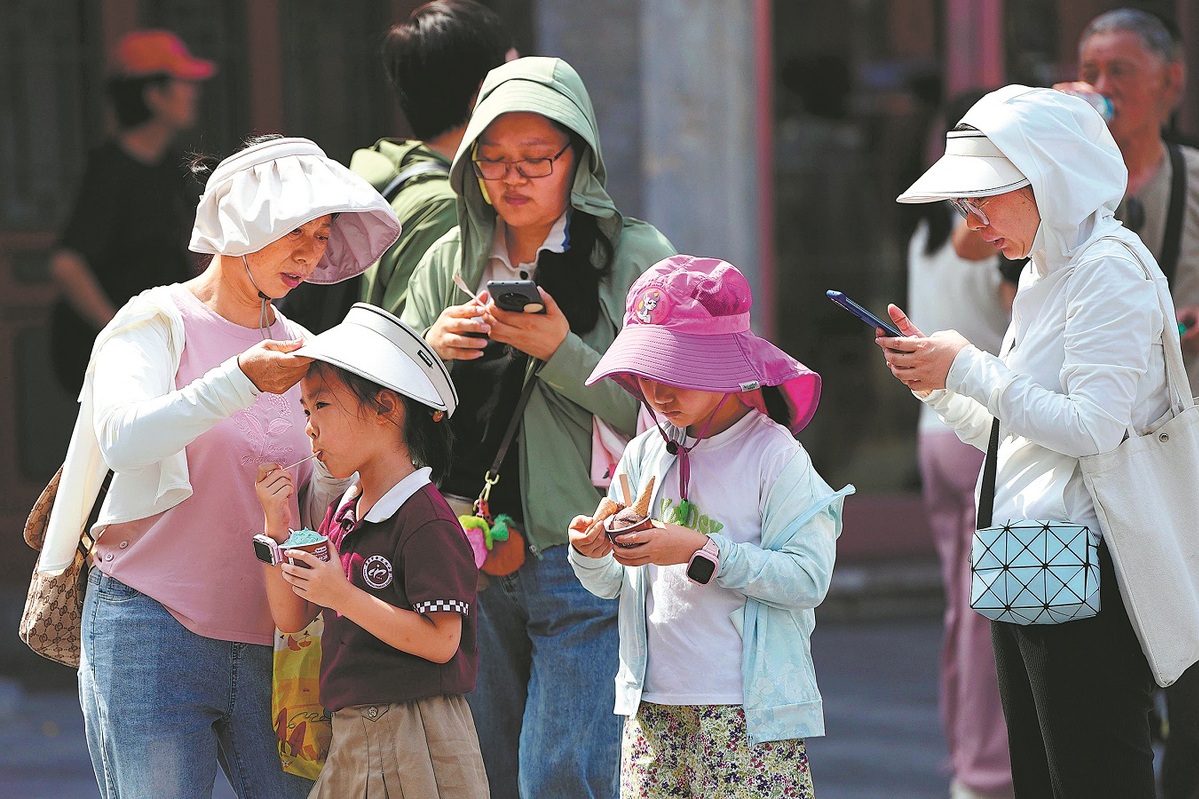
China has experienced several severe heat waves in recent weeks. Scientific evidence is unequivocal: extreme weather events — heat waves, droughts, floods and typhoons — are becoming more frequent and intense due to climate change. These events are directly impacting children’s health and well-being, often even before they are born.
The 2024 report of the United Nations Children's Fund (UNICEF), "A Threat to Progress: Confronting the Effects of Climate Change on Child Health and Well-being", shows a stark reality: globally, one in every five children — 466 million — live in areas experiencing at least twice as many extremely hot days each year as their grandparents did six decades ago. By 2050, every one of the world’s more than 2 billion children will face frequent heat waves.
The consequences are profound. Heat waves increase the risk of premature births, low birth weights, and stillbirths. Babies born too early face lifelong health challenges because their bodies are not yet ready for life outside the womb.
Moreover, extreme heat affects breastfeeding by reducing both the quantity and quality of breast milk, depriving newborns of vital nutrition during their critical early months.
Children are not simply small adults. Their bodies are far more vulnerable to extreme heat as they heat up faster and cool down more slowly. Infants, in particular, are at heightened risk due to their faster heart rates and limited ability to regulate body temperature. Rising temperatures, therefore, pose an especially alarming threat to their survival and development.
Beyond immediate health impacts, heat waves, droughts and floods disrupt food systems by reducing crop yields, leading to malnutrition. Without access to a diverse and nutritious diet, young children's cognitive development can be irreversibly impaired, affecting their potential for a healthy, productive life. Heat waves also increase children's vulnerability to infectious diseases such as malaria and dengue, and interrupt their education, compounding the crisis.
This pattern is repeating worldwide. Climate change is reshaping children’s environments with devastating effects on their health, education and overall well-being. That is why UNICEF calls climate change a child rights crisis. Children contribute least to the carbon emissions driving climate change, yet they bear the greatest burden of its consequences.
The good news is that we can act — and we must act now. UNICEF is leading global and local efforts to both reduce emissions and help children adapt to a changing climate.
Here in China, we collaborate closely with government partners to protect children and build resilience. Working with the Ministry of Agriculture and Rural Affairs, UNICEF is helping develop climate-resilient, child-friendly sanitation systems in schools, health centers and communities, including in rural areas of Qinghai province. In partnership with the Chinese Ministry of Education, we are integrating green skills into technical and vocational education and training, equipping young people with the tools to pursue green jobs and contribute to a sustainable future.
We also advocate with the Chinese Ministry of Ecology and Environment to ensure children's needs are prioritized in National Adaptation Plan.
UNICEF's approach goes beyond policy and infrastructure. We believe children must be at the heart of climate action. Last year, we launched the "China Youth, Climate Action" initiative with the Ministry of Ecology and Environment and the China Meteorological Society, empowering young people to raise their voices on the global stage. This initiative enabled Chinese youths to participate in the 29th UN Climate Change Conference, sharing their perspectives directly with world leaders.
More recently, UNICEF, the Ministry of Ecology and Environment and the China Meteorological Society jointly launched the "Step Up For Climate" campaign, designed to inspire and equip children and young people to become climate champions. The campaign builds awareness, knowledge, and practical skills among young people in China so they can take meaningful action in their schools, homes and communities.
Through Step Up For Climate, young people learn to calculate their own carbon footprints and identify simple yet effective ways to reduce waste and emissions — such as choosing green transport options and conserving water and energy. The campaign also helps prepare children for climate shocks by teaching them how to respond to early warnings of natural disasters.
Importantly, Step Up For Climate encourages children to become climate leaders and advocates within their communities. We want them to inspire their parents, teachers, and peers to join the fight against climate change. While individual actions may seem small, collective efforts can transform our world.
For adults, the message is clear: the world our children are inheriting is already hotter and more dangerous than the one we grew up in. It is our responsibility to act decisively — to limit further climate change, to protect children and to prepare the next generation to adapt and thrive.
By working together — with and for children — we can build a safer, healthier and more sustainable future for all. In China, as across the globe, the time to act is now!
The author is UNICEF representative to China. The views don't necessarily reflect those of China Daily.
If you have a specific expertise, or would like to share your thought about our stories, then send us your writings at opinion@chinadaily.com.cn, and comment@chinadaily.com.cn.