Why China is irreplaceable in supply chain










Global supply chains are undergoing a fundamental transformation. Geopolitical tensions, shifting trade policies, and rapid technological advancement are forcing companies to rethink how they source, produce and distribute goods.
In such circumstances, the question Chinese companies expanding globally face is not just about adapting to but also about building supply chains that are resilient, efficient and sustainable, ensuring their competitiveness on the international stage.
Resilience has become a strategic imperative. It is no longer defined solely by a supply chain's ability to withstand disruption, but by its capacity to ensure continuity, responsiveness, and long-term competitiveness in the face of constant change. In practice, this requires agility, data-driven decision-making and diversified network strategies, especially for multinational companies operating across multiple geographies.
From the perspective of logistics providers, this transformation demands more than physical infrastructure. Companies are increasingly turning to supply chain partners not just for implementation, but also for insight and foresight to help them navigate tariff uncertainty, regulatory shifts and evolving customer expectations.
China plays a pivotal role in this shift. As the world’s largest manufacturing country and a leader in high-growth sectors such as electric vehicles (EVs), life sciences, healthcare and renewable energy, China anchors supply chains essential to global commerce and actively drives its own enterprises’ expansion globally. Fulfilling this dual role requires logistics infrastructure capable of supporting both the complexity of the domestic market and the demands of global standards.
In this context, China's logistics sector faces a dual mandate. On the one hand, it must support the rising complexity of domestic industries with advanced, technology-enabled infrastructure. On the other hand, it must help global businesses navigate a turbulent external environment marked by trade frictions, regulatory shifts and growing demand volatility.
The US-China trade dynamic illustrates this vividly. While some companies have pursued diversification to mitigate tariff exposure, China’s deep manufacturing capabilities, supply base maturity, and logistics scalability continue to position it as a central node in global operations. What we are witnessing is not a retreat from China, but a recalibration, where resilience is built not by replacing China, but by reinforcing flexibility around it.
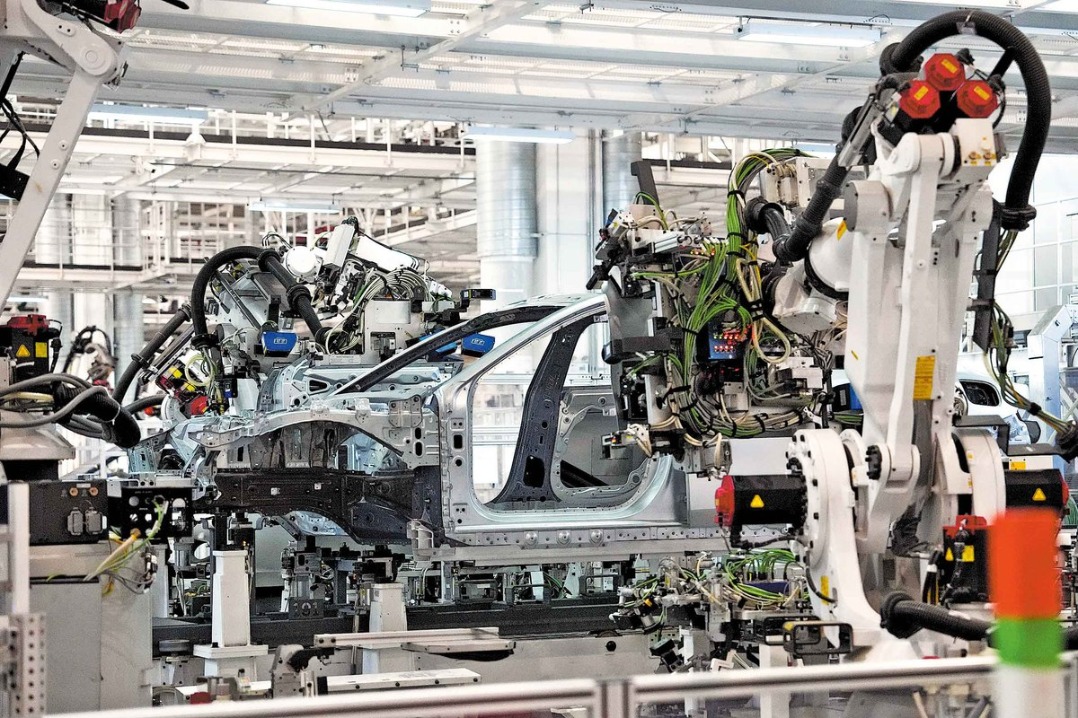
The need for resilient infrastructure is especially clear in sectors with time- and quality-sensitive requirements. For instance, China accounts for more than three-quarters of the world’s battery production and is a central component of the global EV supply chain. Specialized handling of components, such as lithium-ion batteries, which require temperature control, safety certification, and traceability, underscores the demand for tailored, high-performance logistics capabilities.
Meeting these demands requires investment in next-generation warehousing, real-time monitoring technologies, and compliant international freight solutions.
Equally important, the rise of cross-border e-commerce has opened new doors for Chinese small and medium-sized enterprises to access overseas markets, while also introducing added complexities. For these companies, reaching international consumers offers immense potential. Yet without efficient, reliable and transparent logistics networks, these opportunities can be challenging to capitalize on. Services such as warehousing, fulfillment, customs compliance and last-mile delivery have become essential enablers for SMEs seeking to compete on the international stage.
These developments underline a broader truth: supply chains are no longer a back-office function. They are a strategic enabler of growth, innovation and customer satisfaction. For companies, supply chain decisions have become increasingly strategic conversations. For China, this means aligning its logistics infrastructure not only with the needs of manufacturers and exporters but also with global standards in sustainability, transparency and digital innovation, ensuring it can maintain its dual role as the world’s manufacturing engine and a frontrunner in emerging industries.
However, resilience must not come at the expense of sustainability. The push for carbon-neutral logistics is no longer optional. Customers, regulators and investors increasingly expect businesses to reduce the environmental footprint of their supply chains. Logistics providers are responding with cleaner transportation modes, smarter routing, energy-efficient warehouses and digital tools to help clients monitor and reduce emissions.
China’s logistics sector has made strides in this direction. Collaborative efforts between government, industry and academia can accelerate the transition, aligning infrastructure development with sustainability goals while maintaining operational excellence.
Ultimately, supply chain resilience is a shared responsibility. Logistics providers, manufacturers, policymakers and technology innovators all play a crucial role. In this interconnected world, disruptions in one region can have a profound impact globally. The goal, therefore, is not merely to build resilience in isolation but to foster resilience that strengthens the entire ecosystem.
In a world where uncertainty is the only constant, resilient supply chains — anchored in adaptability, transparency and sustainability — will be the foundation on which future growth is built. For Chinese companies going global, this resilience is not just about risk mitigation; it is a cornerstone of their international competitiveness and long-term success.
The author is CEO of DHL Supply Chain Asia Pacific. The views don't necessarily reflect those of China Daily.
The views don't necessarily reflect those of China Daily.
If you have a specific expertise, or would like to share your thought about our stories, then send us your writings at opinion@chinadaily.com.cn, and comment@chinadaily.com.cn.