Lipton investing big in nation's supply chain









Global tea brand Lipton is doubling down on its China strategy with a major investment in supply chain infrastructure, as it looks to regain momentum in a market increasingly dominated by freshly brewed and sugar-free tea drinks.
Hiufan Tsang, general manager of Lipton Greater China, recently led a site visit to Huangshan in Anhui province to inspect progress on the Liheng central warehouse — a logistics hub expected to streamline the brand's operations across the country, according to a media report.
With a total investment exceeding 50 million yuan ($6.9 million), the project is designed for completion in 2027 and is a cornerstone of Lipton's efforts to cut costs, improve delivery efficiency and sustain margins in a rapidly shifting market.
The move comes amid rising pressure on traditional tea bag formats, as China's younger consumers pivot toward healthier, fresher and trendier alternatives. The sugar-free ready-to-drink segment and freshly brewed tea brands such as Heytea and Naisnow have gained significant traction, challenging longtime players like Lipton.
Lipton is responding by diversifying its product lineup and distribution strategy. The brand plans to launch a caffeine-free rooibos tea this year aimed at health-conscious consumers, and is accelerating the rollout of cold brew and loose-leaf formats.
Lipton has focused on catering and office consumption scenarios. The brand continues to draw strength from its dominance in out-of-home consumption. Tea powders for iced and milk tea remain top sellers in fast-food chains and other catering outlets.
"Roughly a third of our China business comes from e-commerce," Tsang said to Foodinc, a website. "But weekday sales outperform weekends — a clear sign of our office-based consumption model."
According to market research firm Frost & Sullivan, China's tea market grew from 273.9 billion yuan in 2019 to 334.7 billion yuan in 2023, and is projected to reach 427.6 billion yuan by 2028, expanding at a compound annual growth rate of 5 percent. Lipton aims to capture both retail demand and the rising consumption from food service sectors, where freshly made tea drinks are becoming mainstream.
An analysis of the keyword cloud related to "tea bags" on social media reveals a strong correlation between "health-promoting teas" and various health-oriented ingredients. This indicates that consumers are increasingly turning to tea bags as a convenient means of incorporating wellness into their daily routines. It also highlights how the growing health-consciousness trend is fueling the expansion of the tea bag market.
According to market researcher Mintel Group, sales of tea bags are projected to reach 19.3 billion yuan in 2024, marking a growth rate of 6.6 percent. Looking ahead, Mintel forecasts that the tea bag market will continue to benefit from rising demand for health-focused products.
This market is expected to leverage the convenience of tea bags compared to traditional tea-brewing methods, while also offering a more direct tea-tasting experience than ready-to-drink teas. These factors are anticipated to sustain the market's growth trajectory over the next five years.
Lipton currently offers over 200 products in China, spanning tea bags, loose-leaf cans and powdered products. It serves about 2 billion cups annually and operates across tens of thousands of catering outlets.
But maintaining market share is becoming increasingly difficult as nimble Chinese startups such as Chali and Xiaoguancha introduce premium tea products with modern branding and localized flavors.
Lipton has invested heavily in fast-food chain partnerships and is positioning itself as a key ingredient supplier to major beverage operators entering capital markets.
"New tea drink brands going public in Hong Kong are a huge opportunity for us," Tsang told Foodinc. "We can serve consumers across different touch points — with tea bags, iced tea powder and milk tea powder — allowing us to smooth seasonal demand fluctuations."
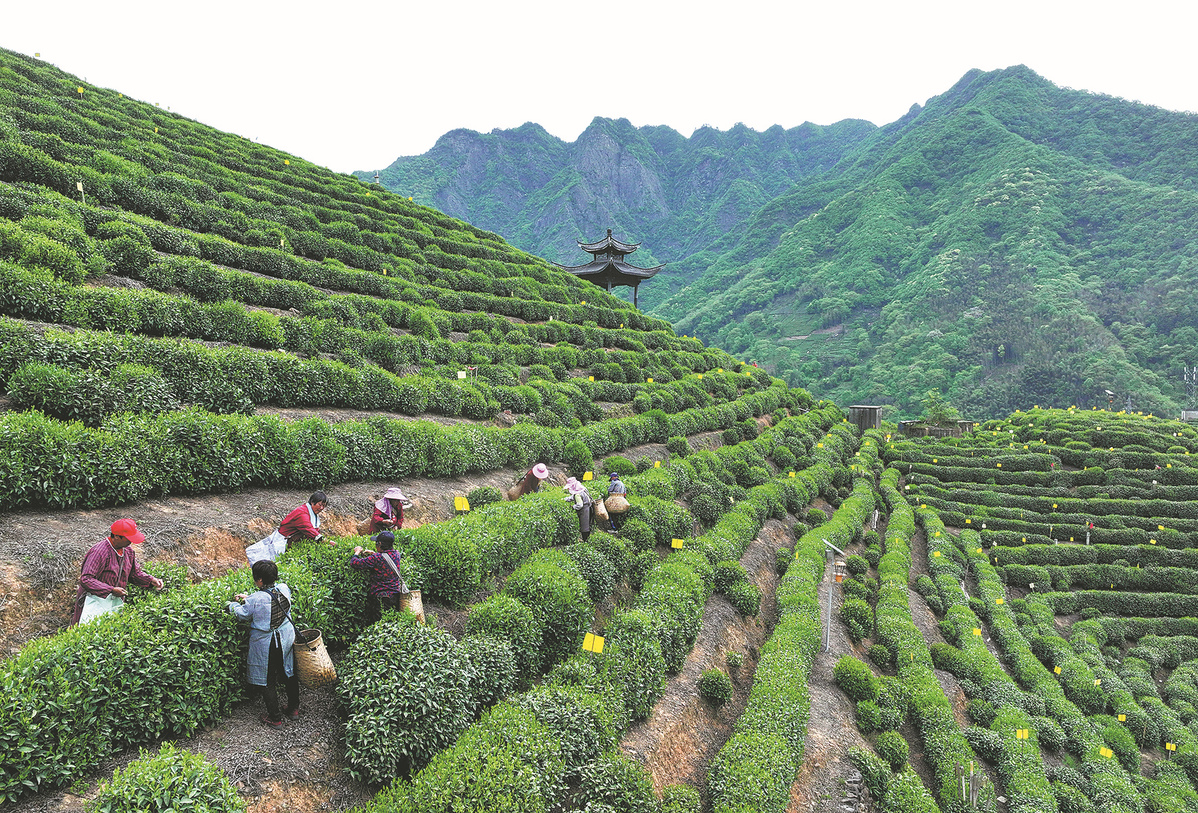
The Huangshan logistics hub marks a geographic and strategic expansion of Lipton's China footprint. Located in one of China's most prominent tea-producing regions — home to famed varieties such as Huangshan Maofeng and Qimen Black Tea — the new warehouse has been backed by strong local government support, including rent-free factory space and land reserves for future growth.
The region's tea industry output reached 28.35 billion yuan in 2024, with exports from Huangshan totaling 240 million yuan in the first two months of the year, accounting for nearly 83 percent of Anhui's tea exports.