Cultural identity
Singaporean author traces the evolution of Singaporean Chinese names









Editor's note: In this weekly feature China Daily gives voice to Asia and its people. The stories presented come mainly from the Asia News Network (ANN), of which China Daily is among its 20 leading titles.
A Chinese Singaporean born in the 1960s might have been registered as Shiau Vee Hueng. By the 1980s, the same person would have been named Shiau Vee Hueng, Don (Xiao Weixiong, Don).
In the 1990s, the name might appear as Shiau Weixiong in his birth certificate, and by the 2010s, possibly as Don Shiau.
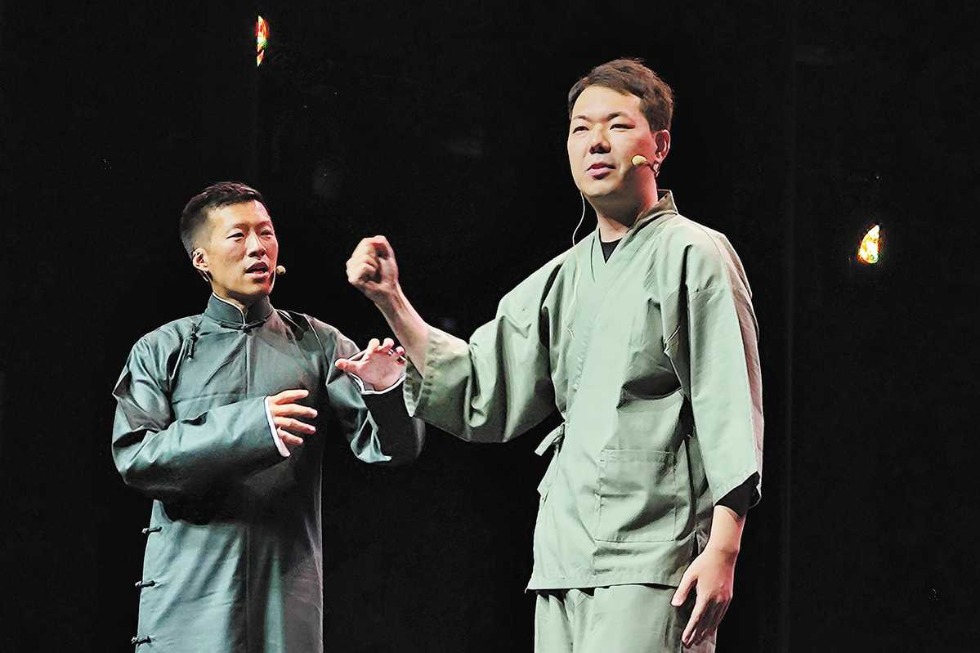
Writer Don Shiau noted this anecdotal observation using his own name at his talk at the National Library of Singapore on June 8.
The talk, titled "The Comfortable Chaos of Singaporean Chinese Names", was part of his residency with the National Arts Council-National Library Board Writers' Lab 2025 from February to April, a program that supports writers at the early stages of developing manuscripts.
He plans to write a book about the different "personas" he adopts when referred to by different names.
Shiau's interest in Singaporean Chinese naming conventions began in mid-2024, when he noticed that his identity card listed both a dialect name and a pinyin one.
Now 44, he recalled having to write his name in pinyin in primary school, despite being given a dialect name.
He later learned this was a result of Singapore's 1979 Speak Mandarin Campaign, a language policy aimed at replacing Chinese dialects with Mandarin to promote greater communication among Chinese Singaporeans.
Academics told The Straits Times that Singaporean Chinese naming conventions have evolved over time, shaped by shifts in policy, preferences and broader global influences.
But in the absence of longitudinal and representative data, any generalizations should remain tentative, said Lee Wee Heong, head of Chinese studies at the Singapore University of Social Sciences.
In the 1950s, linguists created hanyu pinyin in order to standardize the pronunciation and romanization of Mandarin. Singapore was the first country to adopt the system outside of China in the 1970s.