Rural vitalization will make green countryside more pristine










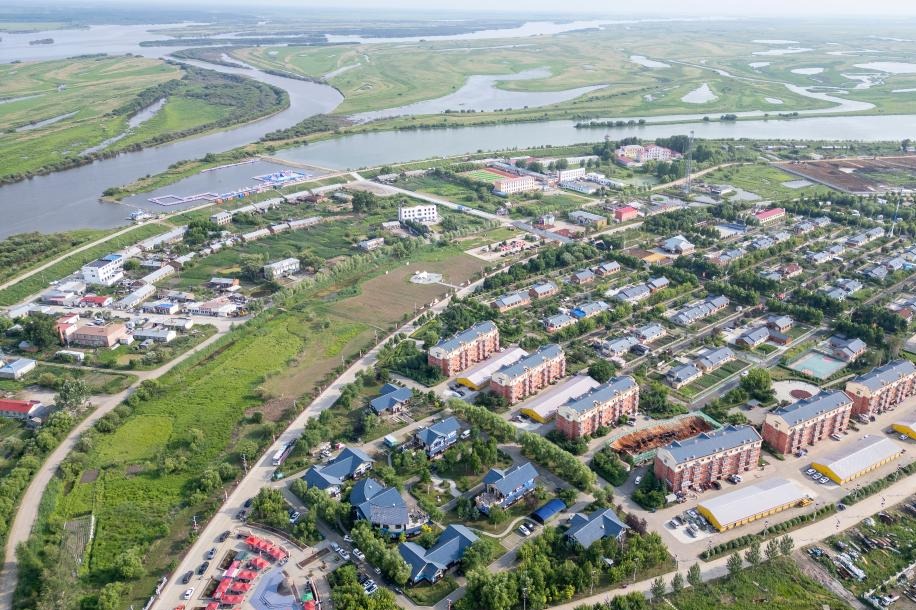
To escape the summer heat in Beijing, my wife and I have been living in a fishing village 2,000 kilometers northeast of the capital since late June. Surrounded by vast wetlands and situated on the Wusulijiang River, our village, Zhuaji, is the easternmost village of China. As a result, Zhuaji is the first place in China to receive the sun's rays every morning.
Daily temperatures in Zhuaji vary between 13 C and 27 C even at the height of summer, the air quality is excellent throughout the year, and the views of the ever-changing river and the wetlands are breathtaking. Life in the village is relaxed and convenient because Zhuaji, being a tourist destination, has quite a few restaurants and shops. Before mealtime, one just needs to go to the river dock to buy a fresh fish or a few fishtails before picking some in-season organic vegetables — eggplants, cucumbers, beans, tomatoes, spring onions — from the garden behind the house. Make some rice, stir-fry the vegetables and fish, separately or together, and a simple, healthy meal is ready.
Everything is fine except that the nearest city, Fuyuan, is 50 kilometers away. So when we needed to buy some daily necessities or beef/mutton or some other vegetables and fruits, we were frustrated by the lack of transportation.
"Why don't you try the rural bus?" A villager suggested, which prompted us to check out the "village bus stop". Yes, the village is on a regular bus route to the city, with buses passing by four times a day. We didn't know about the bus service because there are no bus stop signs there. Since the villagers know the bus timings, they wait on the "bus stop" at the right time and wave the bus to a stop before boarding it.
Our bus arrived right on time at 7 am. The previous one had left an hour earlier. The 30-seat bus was similar to the ones plying in the cities, clean and well-maintained, and the driver was wearing a uniform. The fare — 15 yuan ($2.08) per person — was reasonable for a distance of 50 kilometers. We paid by scanning a QR code.
It took us 70 minutes to get to the city center, not because of poor road conditions but because the driver had to make detours to drop off or pick up people in villages a few kilometers off the main road. At a bus stop before the final destination, a middle-aged woman boarded the bus with a basketful of vegetables. "Home-grown, too much for my family to consume …That's why I'm carrying them to the city market to sell and earn some money," she said before paying 6 yuan for the ticket.
To bridge the development gap between urban and rural areas, China has invested trillions of yuan over the past two decades to build durable roads in rural areas. By the end of 2023, China's rural roads add up to 4.6 million kilometers with 90 percent of them being covered with cement or bitumen.
Improved rural roads have made it possible for the authorities to provide better bus services to villagers. Data show that 342,000 buses operate in rural areas, connecting 50.2 percent of the country's 600,000 administrative villages with nearby cities. Some better-off cities offer free bus rides to villagers above the age of 60 while some other places provide buses for transporting goods, making it easier for villagers to carry their farm produce to city markets.
But problems remain. For instance, Zhuaji residents complain that the buses are not frequent enough. If you miss a bus, you have to wait for hours for the next one. And if you miss the last bus back to the village, you either have to pay 150 yuan for a taxi to return home or spend the night in a hotel in the city.
Also, in many cases, most of the roads in rural areas are narrow, and thus prone to traffic snarls and accidents. On our way back to the village, we had to stop for 10 minutes at a place to allow heavily loaded trailers from the opposite side to pass by.
Yet I believe things will improve now that the central authorities have intensified the rural vitalization program.
The author is former deputy editor-in-chief of China Daily.