GGI will help make world a better place









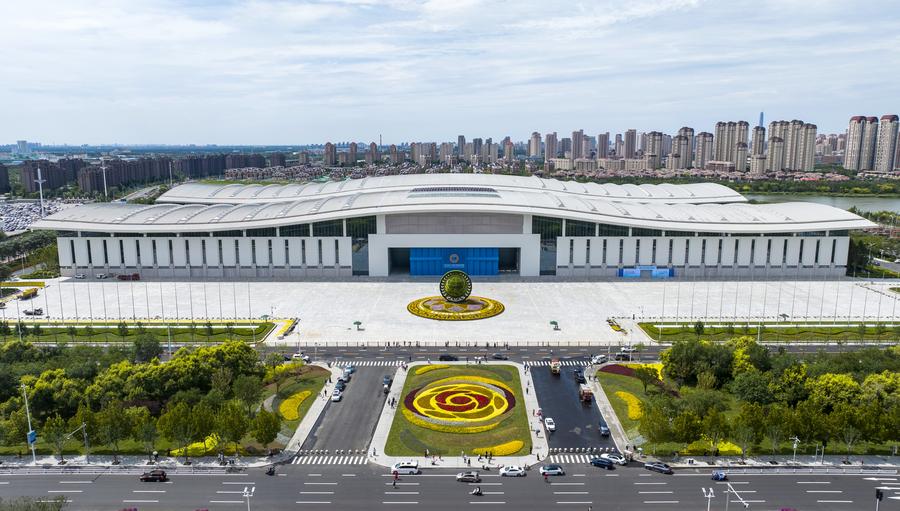
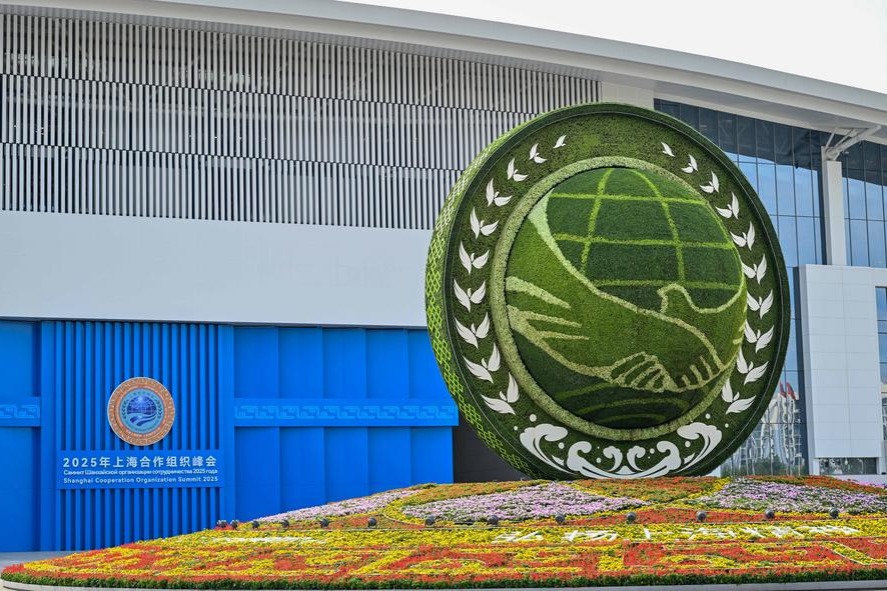
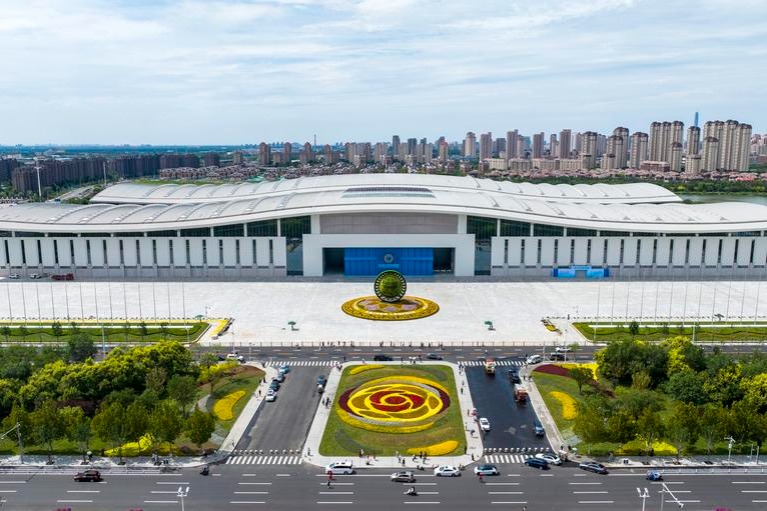
President Xi Jinping proposed the Global Governance Initiative at the Shanghai Cooperation Organization Summit, held in Tianjin on Aug 31 and Sept 1. The GGI is China's strategic response to the current international political and security situation, and will contribute Chinese wisdom to resolving international governance issues.
All countries, rich and poor, big and small, are victims of traditional and non-traditional security threats including cross-border crimes, cyberattacks, terrorism, trade protectionism, climate change, environmental degradation and pandemics. The GGI is designed to help tackle these issues.
While implementing the GGI, first and foremost, it is imperative to adhere to the postwar world order based on international laws and the UN Charter. Since the global status of countries is not static, the world order, which reflects these changes, cannot be rigid either, more so because the Global South is rising in terms of both economic strength and overall influence.
With the peaceful rise of China and other emerging economies, and the intensification of major-power competition, the United States-led G7, too, has begun to advocate a so-called "rules-based international order".
But what are these "rules"? Who defines and formulates them? Apparently, the G7-proposed "rules-based world order" is often designed to break free from the constraints of international law and the UN Charter in the interest of the "rich countries' club".
There should be only one world order that is based on international law and the UN Charter.
Second, North-South cooperation must be vigorously promoted, and both developed and developing countries should deepen cooperation, so as to improve global governance. But in the process of deepening cooperation, all parties should abide by the principle of "common but differentiated responsibilities". The word "common" means that all countries should jointly share the responsibilities, while the word "differentiated" means that different countries should bear the responsibilities according to the level of their economic development. Therefore, developed countries, instead of shying away from their responsibilities, should leverage their advantages in capital and technology to assist developing countries.
Third, there is a need to always uphold multilateralism. Global issues pose a challenge to almost all countries and could even imperil the well-being of people across the world. Hence, all countries should uphold multilateralism while addressing these issues.
In essence, multilateralism helps us handle international affairs with openness, inclusiveness, and cooperation, on the basis of mutual benefit and the "Five Principles of Peaceful Coexistence". Multilateralism emphasizes that all countries are equal, irrespective of their size, economic status and military power, while embodying the democratization of international relations as the core concept of the existing international system.
And fourth, academics need to offer effective intellectual support for implementing the GGI. Global governance is both a theoretical and practical issue. For policymakers, down-to-earth ideas or solutions are more important than empty theoretical analysis and conceptual research.
Besides, research on global governance can be divided into many sub-areas including global artificial intelligence governance, global climate governance, global development governance, global digital governance, global economic governance, global environmental governance, global financial governance, global health governance, global internet governance, global intellectual property governance, global maritime governance, global security governance, global space governance, global trade governance, global tax governance, and global human rights governance.
Discussions on global governance in the general sense should promote shared development and win-win cooperation, with the aim of resolving complex global issues. We need to keep trying to resolve the complex challenges, especially because the GGI will now help us do so and make the world a better place to live.
The author is a professor at Macau University of Science and Technology.
The views don't necessarily reflect those of China Daily.
If you have a specific expertise, or would like to share your thought about our stories, then send us your writings at opinion@chinadaily.com.cn, and comment@chinadaily.com.cn.