Echoes of great civilizations
China and Europe are both committed to multilateralism, climate action and global economic stability










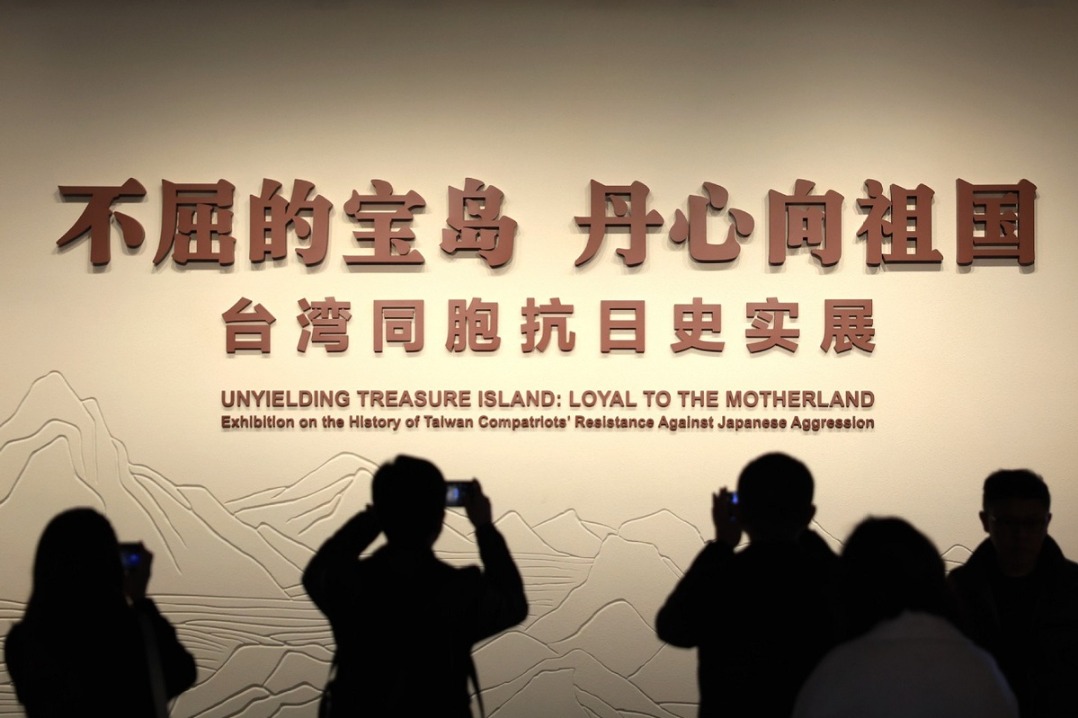
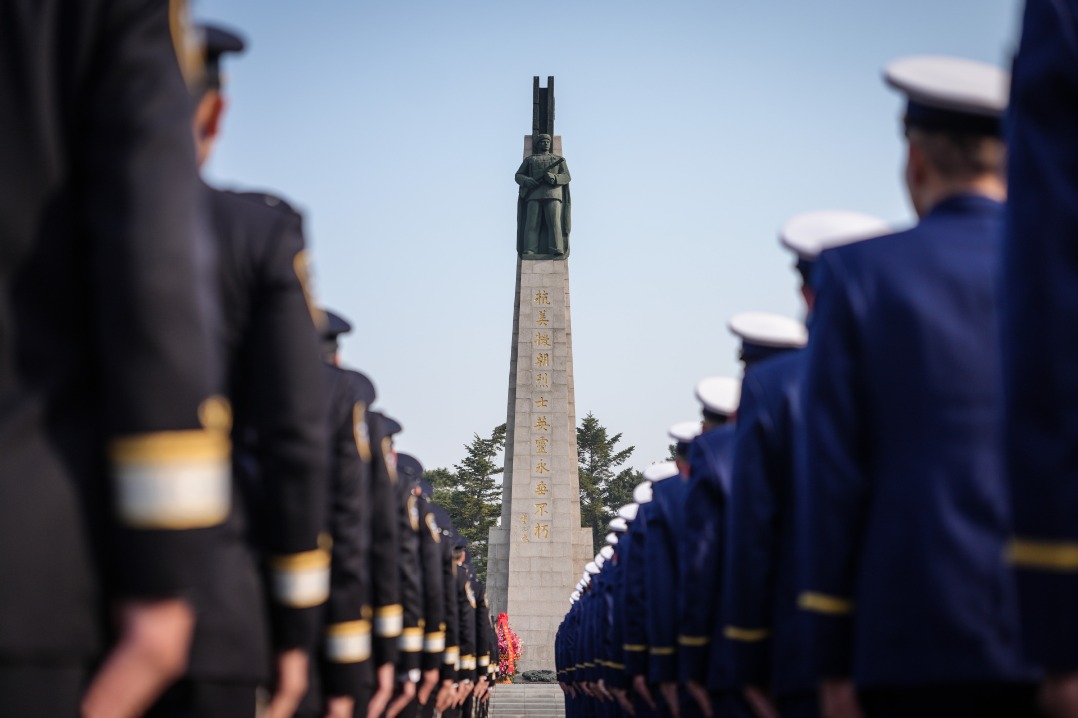
On Sept 3, China commemorated the 80th anniversary of victory in the Chinese People's War of Resistance Against Japanese Aggression (1931-45) and the World Anti-Fascist War. This event served as both a historical milestone and a lens through which to view China's evolving role in global affairs. From a European perspective, the anniversary has prompted new reflections on China's historical contributions and modern governance innovations.
China's wartime struggle claimed over 35 million casualties, but it has been downplayed in favor of events such as D-Day or Stalingrad in the Western diplomatic and academic narratives. Without this somber reflection, it would be difficult to form a comprehensive understanding of China's coherent emphasis on sovereignty, non-interference and opposition to unilateralism. Unlike the Western approach, which historically emphasizes codified rules, universal norms, interventionist mechanisms, hierarchical structures and the enforcement of liberal values, the Chinese conception of international relations is grounded in the principles of sovereign equality, harmony, consensus and pragmatism. The Chinese view of international law acts not only as a constraint, but also as a framework that prevents conflict, fosters cooperation and accommodates diversity between nations.
Western legal frameworks, shaped over centuries of European tradition, prioritize universal legal norms enforced through courts, sanctions or peacekeeping. They often link intervention to human rights, democracy or global standardization. These frameworks heavily rely on hierarchical decision-making within institutions, in which powerful states hold disproportionate influence. They also separate law from culture and soft power, emphasizing formal procedures over dialogue. In contrast, China integrates diplomacy, mediation and cultural engagement into its legal philosophy. China favors negotiation and consensus-building over judicial enforcement and intervention, adapting principles to regional and cultural contexts rather than assuming a one-size-fits-all approach. China's diplomatic style vividly illustrates these differences.
A prime example of this strategic ambition is the launch of the International Organization for Mediation (IOMed) in 2023 in the Hong Kong Special Administrative Region. Designed to provide a platform for the peaceful resolution of disputes — particularly for countries in the Global South that often feel marginalized by existing institutions — the IOMed has attracted European attention for its innovative approach to mediating international political and economic conflicts. The organization aligns with Europe's longstanding commitment to dialogue and peaceful conflict resolution. For China, the IOMed reflects the belief that a new multipolar order must be built on the foundations of law, diplomacy, dialogue and respect for sovereignty.
The Chinese method is evident in how it approaches international crisis resolution. The 2023 Saudi-Iran rapprochement, for example, was facilitated by China and is often cited in Europe as evidence of China's growing influence as a mediator capable of resolving long-standing disputes. Such initiatives particularly resonate with nations in the Global South, many of which seek alternatives to Western-centric diplomatic frameworks. But although Europe recognizes the stabilizing potential of Chinese mediation, it remains cautious, especially regarding issues that directly affect its strategic interests. European analysts are considering the implications of China's increasing influence in resolving global conflicts, weighing up the effectiveness of its approach against concerns about transparency, respect for international law and potential institutional competition. Nevertheless, such ambivalence should not obstruct deep and high-level dialogue with China, aimed at preserving and strengthening international peace and security while fostering cooperation between China and Europe.
Moreover, China's institutional initiatives — such as the Shanghai Cooperation Organization, the Belt and Road Initiative and the Asian Infrastructure Investment Bank — are intended to serve as alternative sources to meet the needs of the development and infrastructure financing of a multipolar world. By doing so, China is supplementing and reforming existing Western-led institutions. Many states in the Global South perceive this as a viable alternative for addressing the long-standing disadvantages they have faced under the Western-dominated system of rules and institutions. Europe's assessment of these efforts is nuanced. While some policymakers view them as competitors to traditional frameworks, many acknowledge that these initiatives respond to genuine needs and that constructive engagement offers opportunities to enhance global stability and inclusiveness.
It should be noted, more generally, that the relationship between China and Europe is not defined by irreconcilable conflicts of interest. On the contrary, both parties are committed to multilateralism, climate action and global economic stability. Furthermore, they share a mutual interest in resolving international disputes peacefully and recognize the benefits of a deeply interconnected global economy.
Cultural diplomacy further reinforces Chinese approach to international relations. Europeans recognize that, alongside soft power goals, China's promotion of language, culture and academic exchange also serves practical diplomatic objectives by facilitating dialogue, trust and cooperation in multilateral settings. These initiatives, ranging from European universities hosting Confucius Institutes to joint research projects on climate and technology, establish channels of engagement that supplement formal diplomatic activities. Stability and law are cultivated not only through treaties and institutions, but also through a shared understanding and cultural dialogue.
Against a backdrop of geopolitical tensions and mutual distrust in economic and trade relations, China and Europe, two major civilizations that champion diversity, should strengthen cultural exchanges to build mutual understanding. Such exchanges help consolidate trust and lay the groundwork for closer political, economic and diplomatic cooperation, paving the way for a multipolar world.
The author is an associate professor of international law at the Department of Law and a senior research fellow at the China Center at the University of Macerata, Italy. The author contributed this article to China Watch, a think tank powered by China Daily.
The views do not necessarily reflect those of China Daily.
Contact the editor at editor@chinawatch.cn.