A tale of two neighbors when tourism rebounds










In a world fraught with divisions, tourism can help build bridges. The recent reciprocal visa-free arrangements between China and the Republic of Korea show tourism can write a special chapter of people's exchanges in the tale of the two neighbors.
China unilaterally initiated a time-limited visa-free policy for ROK citizens in November 2024. In a reciprocal gesture, Seoul rolled out a temporary visa-free policy for Chinese group tourists from Sept 29 this year, allowing applications through designated travel agencies. Both measures have effectively lowered financial and procedural hurdles and given fresh momentum to cross-border exchanges.
The numbers speak for themselves. According to the ROK's official statistics, nearly 1.99 million ROK tourists visited China between January and August this year, a 40.6 percent increase year-on-year. In September alone, more than half a million Chinese tourists visited the ROK, up 16.4 percent year-on-year.
While it is still too early to assess the future impact of the visa-exemption policy for Chinese visitors, the Bank of Korea estimates that the visa-free policy, which is valid until June 2026, could attract 1 million Chinese tourists to the ROK, generating 2.56 trillion won ($1.79 billion) in tourism revenue and boosting the country's GDP growth by 0.08 percentage points.
The ROK is elevating tourism and culture to the global stage. The government has identified the cultural sector as a national strategic industry. A 2025 report from the Korea Culture and Tourism Institute found that every $1 million in cultural exports enhances the national brand value by $410,000. These numbers are a testament to the multiplier effect of culture.
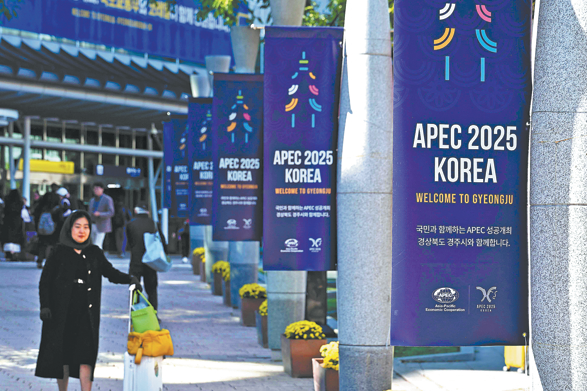
At a tourism promotion meeting in August, ROK Prime Minister Kim Min-seok urged officials to use the 2025 Asia-Pacific Economic Cooperation Economic Leaders' Meeting in Gyeongju as a launchpad for promoting the country's tourism. President Lee Jae-myung echoed this sentiment in October, emphasizing that attracting an additional 10 million tourists would yield an impact comparable to expanding exports.
Accordingly, the ROK has proactively framed tourism and culture among the priorities in the APEC agenda. It plans to leverage the venue, Gyeongju, its ancient capital with a thousand-year history, to promote its tourism industry on a global stage.
Meanwhile, the revival of official and non-official exchanges underscores a perceptible thaw in China-ROK relations. Coinciding with the APEC event, meetings of provincial-level governors from both countries are expected to resume in Seoul after a seven-year hiatus. They will explore collaboration in high-tech industries and people-to-people exchanges.
Also, Roh Jae-heon — ROK's new ambassador to China and son of former president Roh Tae-woo who helped establish diplomatic relations with Beijing in 1992 — has assumed office. His appointment symbolically links the past and present of bilateral engagement.
The positive momentum in official diplomacy has encouraged non-governmental exchanges in various fields. South Jeolla Province of the ROK recently hosted a tourism and food culture event in Yancheng, Jiangsu province of China, while Dongying city in China's Shandong province organized a digital cultural tourism fair in Yangju, Gyeonggi Province in the ROK. These friendly exchanges reinforce the spirit of cultural cooperation between the two nations.
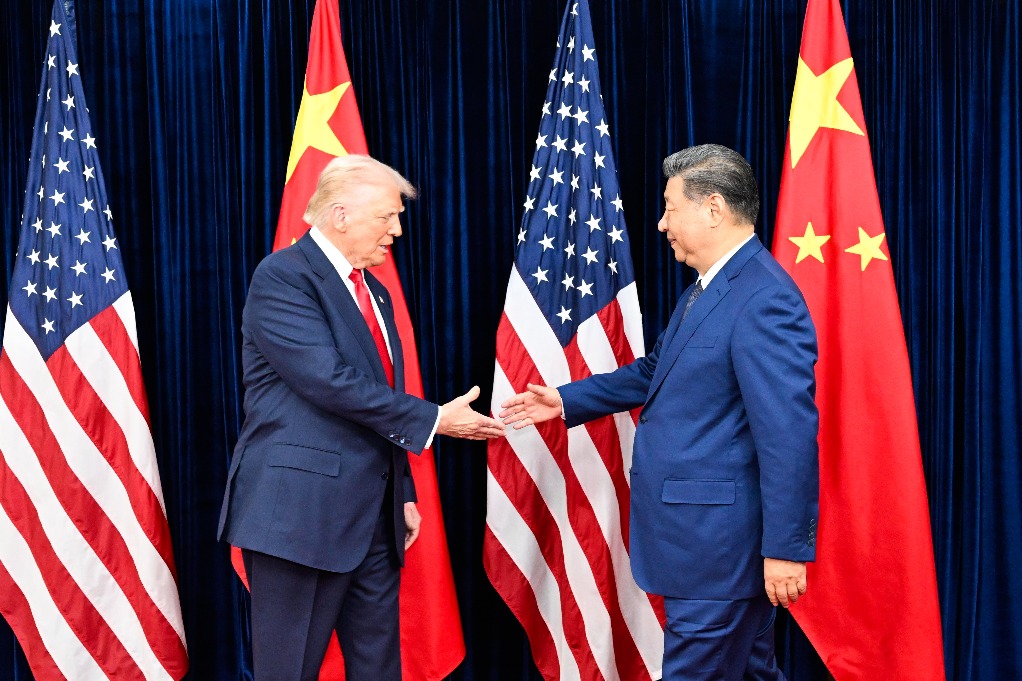
Amid a global environment marked by rising protectionism and unilateralism, the ROK and China must seize the opportunity presented by APEC to build a new model for bilateral relations that focuses on friendly cooperation for peace and development.
The bilateral ties of the two countries are facing two irreversible trends. The first is the transition of their economic relations from vertical complementarity to horizontal competition, where in some areas competition outweighs cooperation.
The second is the resulting frictions caused by this intense competition. Both governments and their people should face up to these realities.
But it should also be noted that by enhancing friendly communication across political, economic, social, and cultural fields, China and the ROK can resolve conflicts and misunderstandings, deepen mutual understanding between their societies, and create an environment conducive to sustainable development of bilateral relations. This underscores the importance of strengthening cooperation in two-way tourism, expanding official exchanges and boosting nongovernmental interactions.
As China has consistently emphasized, peace and development should remain the defining themes of our times. And this is precisely what tourism can foster. The APEC meeting presents an opportunity for China and the ROK to reverse the downward trend in cooperation across various fields. The mutual visa-free policies have been a good start. The task ahead for both countries is to sustain this positive momentum.
The author is the director of Sino-Korea Economy/Society Institute based in Daegu, the ROK.
The views don't necessarily represent those of China Daily.
If you have a specific expertise, or would like to share your thought about our stories, then send us your writings at opinion@chinadaily.com.cn, and comment@chinadaily.com.cn.