Experts advocate increasing scope of BRI to include soft power sectors









Experts speaking at a recent forum in Shanghai emphasized the importance of expanding the scope of the Belt and Road Initiative beyond infrastructure to include soft power sectors. The experts said collaborations in areas such as science, culture, heritage, sports, education and health, among others, would help countries collectively tackle global challenges.
The ninth International Academic Forum on the Belt and Road and Global Governance focused on exploring new developments and opportunities for the initiative in the contemporary era. The forum was jointly hosted by Fudan University and the Silk Road Think Tank Association.
Participants noted that the current global governance system is changing rapidly, with global issues gaining prominence. They emphasized that the BRI, embodying shared values in addressing global crises and achieving secure development, is entering a critical phase as far as global governance is concerned.
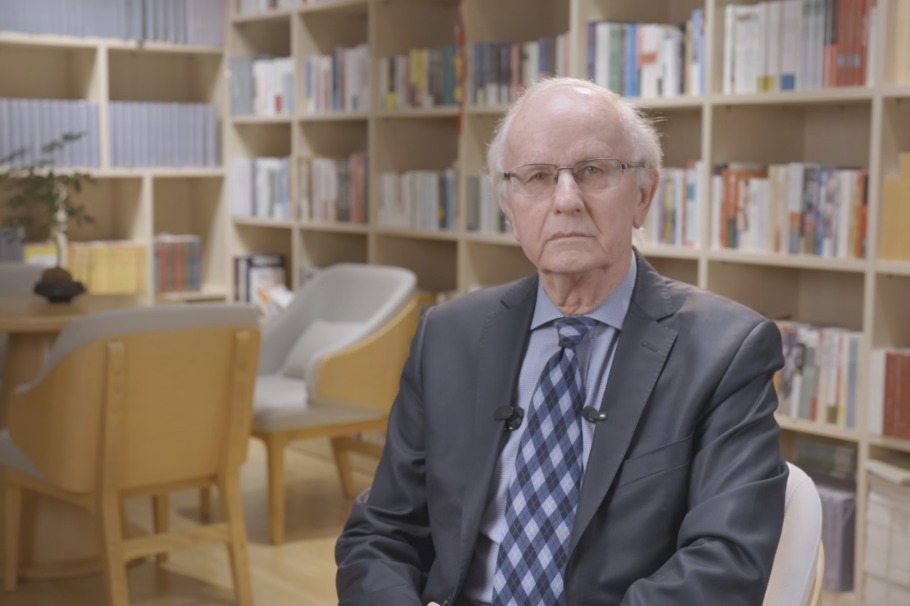
Erik Solheim, co-chair of the Europe-Asia Center, praised China's efforts to guide the BRI toward a green transition, calling the country an indispensable force in global green transformation.
"In my opinion, a new direction for the BRI in the new era is what's called the 'small and beautiful projects' in the soft sectors. China has been very strong on hard infrastructure, environment, railroads and roads, and can do more in areas like global health and education," said Solheim, who is also a former undersecretary-general of the United Nations and executive director of the UN Environment Programme.
Solheim highlighted the need for a digital direction aligning with new productive forces, as many developing nations are struggling to catch up with China and the United States in the digital economy.
"The BRI can help them by providing both digital infrastructure, like data centers and access to high technologies and artificial intelligence," he said, recalling the rapid development of China's economy and society since his first visit to Shanghai in 1984.
Liu Zhiqin, a senior fellow at Renmin University of China's Chongyang Institute for Financial Studies in Beijing, stressed the need to expand BRI cooperation in areas directly impacting people's lives, such as education, health and technology. He advocated increased investment in projects that benefit citizens of participating countries, fostering high-quality, practical collaboration.
"Amid the challenges facing globalization, the BRI should build consensus through a mechanism of shared benefits, connecting the outcomes of cooperation to more countries and regions. This will further enhance its role as an international public good and a platform for collaboration," said Liu, who is also the chief representative of the Beijing representative office of the Zurich Cantonal Bank.
Yuan Zhenguo, chief expert of the Shanghai Innovation Institute-East China Normal University Joint Laboratory of AI for Education, spoke about the potential of large models in intelligent education to revolutionize educational cooperation and cross-cultural exchanges under the BRI. He highlighted the role of artificial intelligence in achieving personalized education and fostering international understanding.
"A key focus in the development of such large models in the future will be to uphold the shared values of peace, equality and development, achieving value alignment. This will lay a solid foundation for friendly exchanges among people from the countries and regions involved in the BRI," he said.
As political and economic influences of the Global South countries grow, experts noted the increasing maturity of cooperation mechanisms among these nations. Upholding openness, inclusiveness and mutual benefit, these nations actively promote comprehensive cooperation in political, economic, trade, technological and cultural fields, playing a positive, stabilizing and constructive role in international affairs.
zhouwenting@chinadaily.com.cn




- Competition heats up for new civil jobs
- China plans to implement key education reforms
- Experts advocate increasing scope of BRI to include soft power sectors
- Nation rallies in grief, support after Hong Kong fire
- China launches new satellite into space
- Families remember Nanjing Massacre victims as national memorial day approaches