 |
|
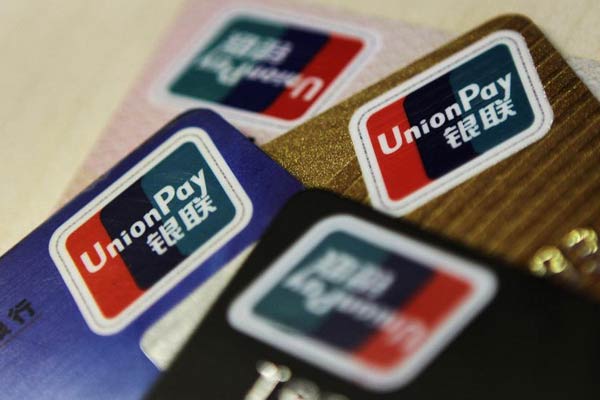
Logos of China UnionPay are seen on bank cards in this file photo illustration taken in Beijing Dec 5, 2013. [Photo/Agencies] |
Imagine a financial system that is far more efficient than the one we presently have. One that is less expensive to run and less costly to use, yet at the same time more robust and much harder to abuse. One that gives individuals more control over their financial transactions while better protecting their privacy.
A revolutionary new technology, the "blockchain", allows parties to carry out direct transactions without using an intermediary. It does so by providing a means for people to share reliable and tamper-proof lists of information known as "distributed ledgers".
It allows firms to do things that they have previously been unable to. For instance, Blockchain could allow banks to introduce the real-time settlement of transactions. By adding full programming capabilities to blockchains we could create "smart contracts", autonomous financial agreements that enforce themselves. We could build "smart wallets" for individuals that would allow them to carry out a large part of their financial transactions on their own, and even manage their money for them.
As with any nascent technology, there are significant challenges as well. Some are technical: blockchain today has issues of speed, scalability and security. Some are legal: autonomous smart contracts require a new type of smart contract law. Some are systemic: direct financial transactions will only work if we can move "real money" onto the chain and solve important issues around digital identity and privacy.
To realize the full potential of blockchain we will above all need to collaborate on a common platform. At UBS, we think it essential that the industry avoid a standards war of the type that has bedeviled the adoption of new technologies in the past.
The good news is that such collaboration is happening. There are already several significant larger collaborative efforts, like the R3 consortium or the Linux Foundation's Hyperledger Project; and many banks, ours included, have been experimenting intensely with the technology and working with peers in open, collaborative ways. These are all positive steps.
At the moment, China's main initiative in the blockchain space is the China Ledger Alliance, a non-commercial organization focused on research and development of blockchain applications. Led by R&D company Wanxiang Blockchain Lab and similar in structure to the aforementioned international collaborations, it can be considered China's answer to the rapidly evolving blockchain ecosystem.
The aim of the alliance is to adapt and develop existing blockchain technology to the needs of Chinese businesses and set standards across the industry to ensure regulatory compliance to China's legal environment. At the moment the alliance counts 15 members, including both financial services firms and technology companies.
Attention to the opportunities that blockchain technology now offers to China was significantly raised at the Global Blockchain Summit held in Shanghai in late 2015. Chinese Regulators have developed a strong interest in blockchain since this Summit. Also, in early 2016, the central bank of China announced its investigation into digital currencies as an answer to the growing interest of Chinese investors in Bitcoin and other crypto-currencies.
Chinese venture capital investments in blockchain have been mainly directed to international companies. However China is also growing a pool of local blockchain startups. A number of established Western start-ups are also eying the Chinese market and could extend their offering soon.
It is impossible to say how or when the overall blockchain puzzle will be solved, or what it will look like. But if we manage to build a common fabric, then I believe large-scale transformation of our industry will happen sooner rather than later. With that, many of the things we are only imagining today will likely become tomorrow's reality.
The author is UBS Group chief operating officer.



Copyright 1995 - . All rights reserved. The content (including but not limited to text, photo, multimedia information, etc) published in this site belongs to China Daily Information Co (CDIC). Without written authorization from CDIC, such content shall not be republished or used in any form. Note: Browsers with 1024*768 or higher resolution are suggested for this site.
License for publishing multimedia online 0108263 Registration Number: 130349