Intertwined economies, diverging systems









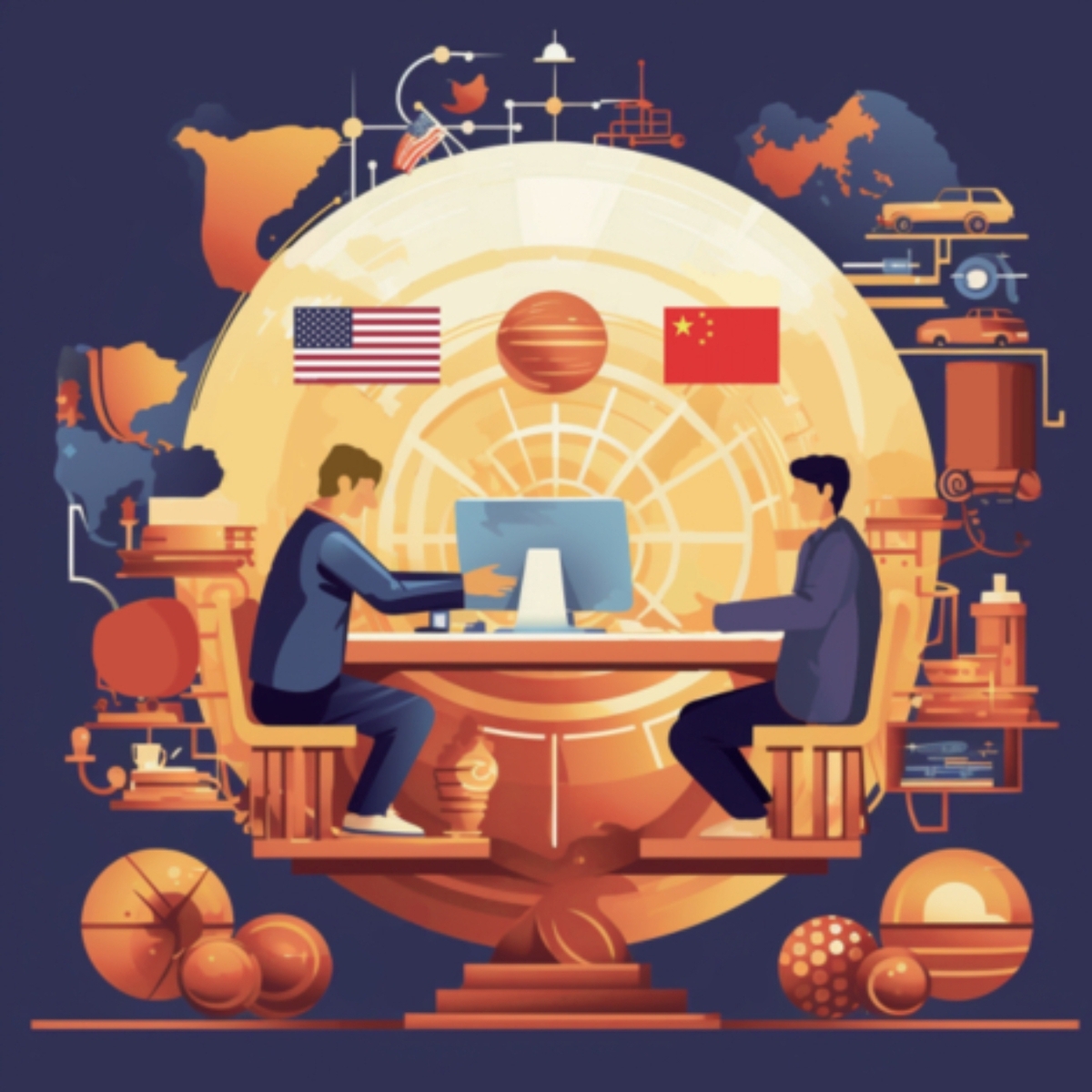
US authorities have recently adopted more covert measures to enforce semiconductor export controls, secretly embedding location-tracking devices in high-risk shipments of advanced chips to prevent their illegal diversion to China, Reuters reported. The move, revealed in late August, marks a sharper turn in Washington's tech rivalry strategy, complementing earlier licensing curbs while Beijing continues to counter with restrictions on critical mineral exports such as gallium, germanium and antimony.
Neither country is associating their respective move with a trade war. Both insist the measures have been taken to safeguard national security. Yet semiconductors, once treated as quiet workhorses of global commerce, have become a symbol of power and self-reliance.
Few technologies reveal the stakes of this major-power competition more clearly than advanced chips. These technologies drive the growth of artificial intelligence, next generation telecommunications, missile systems and even quantum research. Whoever holds the upper hand in these technologies gains, not just an economic edge, but also strategic weight.
For Washington, keeping Beijing away from top-tier chip-making is a way to check any potential military leap by China. For Beijing, the restriction on the export of key raw materials to Washington and investing increasing amounts of resources to promote innovation at home are aimed at avoiding a future where outside powers can hold it back.
The more important story is not who lands the sharper blow in each round. It is what this steady escalation is doing to the way technology is developed and traded around the world. Semiconductor production is sprawling — a single advanced chip might rely on US design tools, Dutch lithography machines, Japanese chemicals, Taiwan's factories and minerals accumulated from across continents. Every new restriction, whether on supply of equipment or raw materials or on sharing of intellectual property rights, forces the entire network to adjust. Companies change production plans, renegotiate contracts and still have to bear higher costs.
This, however, does not mean a total break between the world's two largest economies, at least not for now. What it does mean is longer timelines, higher prices and increasing possibility of two parallel systems emerging. One will be anchored around the US, the other will depend on China. For companies caught in the middle, learning to comply with competing standards and export rules is fast becoming part of the cost of staying in business. For governments, keeping industries secure without suffocating them will need new regulations, more than money.
There is another risk that is harder to quantify. These rolling restrictions could slow down innovation which both Washington and Beijing want to accelerate. Big breakthroughs in technology usually depend on scale, open talent pools and the free exchange of ideas and components. If those connections fray seriously, innovation could slow down despite both sides continuing to invest heavily to speed it up.
The contest over chips is much more than about trade numbers or quarterly profits. It is about deciding which economy sets the rules, which country controls the key tools and how much countries will rely on each other in the future.
Governments can build barriers, and markets tend to find ways around them. So the real question is whether the world's two strongest economic players, policy on one side and commerce on the other, can coexist without breaking the system that has powered decades of technological progress and economic growth globally.
Semiconductors are no longer unseen components powering our devices. They now stand as a measure of influence, determining which economy or economic bloc will command the supply chains, set standards and drive investment flows. The struggle is less about cutting ties than about deciding whose rules will anchor the connections that have survived decades of ups and downs.
However it unfolds, the outcome will not just define the future of technology. It will also reveal how power is organized in a world where economic and strategic interests are no longer easy to separate.
The author is professor of law at City University of Hong Kong and president of the Asia Pacific FDI Network.
The views don't necessarily reflect those of China Daily.