Second curve of heat is raising climate awareness










This summer saw record-breaking heat, with temperatures soaring above 40 degrees Celsius in northern Chinese cities. Now that the peak summer season has passed and temperatures are dropping, the extreme heat and its effects are gradually easing.
But more than the weather, it is a story of climate disruption becoming urban routine. Hence, there is a need to adopt new ways to develop our cities — not as victims of rising temperatures, but as examples of adaptation.
Over the past two decades, extreme heat events have increased. What was once exceptional is becoming normal. The question is: How should cities respond to rising temperatures?
In July, China's Central Urban Work Conference outlined a way to respond to this challenge: building modern cities with people who are innovative and want to live in beautiful, resilient, culturally advanced and smart urban spaces. The conference blueprint places people's well-being at the very core of city planning, design and governance.
I visited Istanbul some time ago during summer. The sun was fierce, but the Bosporus Strait breathed life into the city. A natural wind corridor, it carried the heat away, reminding me that air is not an empty medium; it is a force which should be treated as infrastructure in city design.
In 2024, Hangzhou led the country in reimagining how cities breathe — by including urban wind corridors in its climate strategy, mapping, protecting and refining these airflow channels. Studies show that when wind is given room to flow, the benefits are multifold: during extreme heat events, strategically created wind corridors can ease the heat island effect, cooling neighborhoods and lowering temperatures across a city.
But this has more to do with conceptual than technological application. City planning should no longer be about just expansion and density; it should also be about "porosity", creating channels for wind to flow freely through a city and prevent the heat island effect.
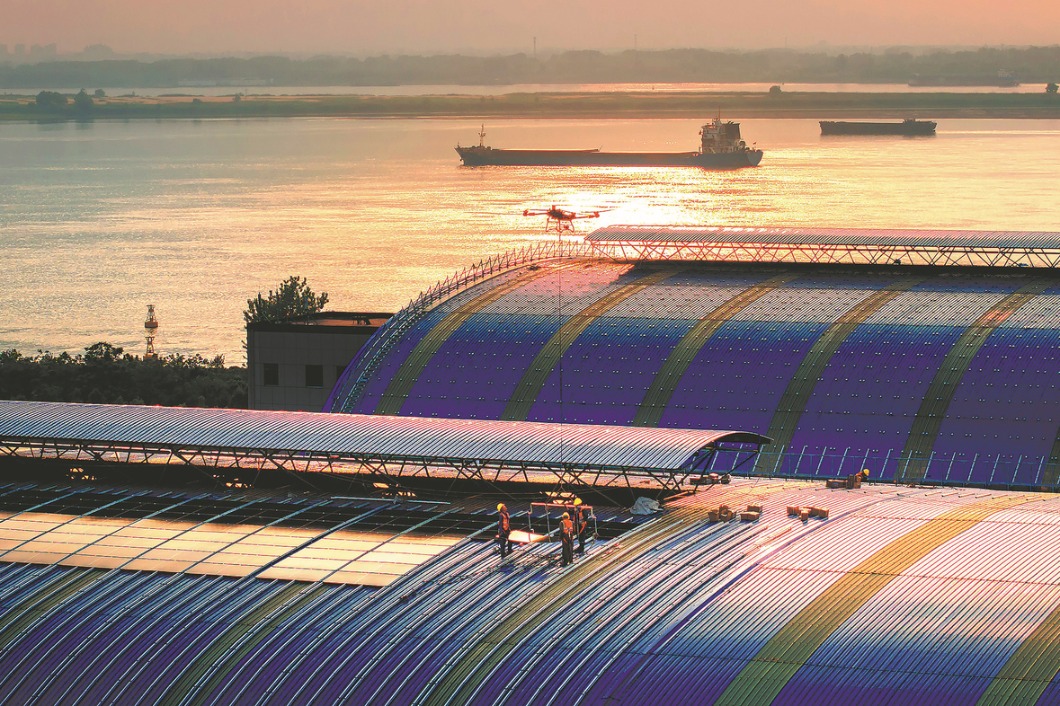
When the sun is most merciless, the electricity grid is pushed to its limits. A better way to address this challenge is to distribute power more wisely, not build more power plants. In fact, Chinese cities are exploring ways to optimize distributed energy systems: installing solar panels, for example, on rooftops of malls, hospitals, schools, and even above parking lots. These solar panels generate power where it's badly needed, reducing transmission stress and contributing to energy security. During heat waves, they help meet local areas' demand for electricity. Paired with energy storage systems, they can capture surplus electricity during the day and use or distribute it during peak evening hours.
This is how we build social resilience to rising extreme weather events. It helps communities more flexibly meet local needs, as well as reduce dependence on centralized power distribution systems. Since building more power plants alone will not shield cities from the threat of power outages during peak heat, we need to develop intelligent, dynamic and user-centric management of demand and supply to build a better future.
China's cutting-edge virtual power plants, such as the pilot in Shenzhen, have transformed countless energy assets — air conditioners, electric vehicle chargers, rooftop solar panels — into a coordinated, cloud-based system. This network can subtly adjust consumption by, for example, raising an office's air conditioning temperature by a mere degree or two, and delaying car charging by an hour or so. The result is a flattened peak load curve, improved grid stability, and minimal impact on people's daily life.
While large-scale urban planning is essential, the lived experience of extreme heat often centers on particular hotspots — old neighborhoods, crowded bus stops, open-air construction sites, bustling public squares — where traditional upgrading of the system is especially challenging. In such places, precise, context-sensitive interventions can offer relief.
These micro-interventions, though limited in scale, can have an outsized impact, transforming moments of discomfort into experiences of care and comfort. True urban resilience transcends infrastructure, and nurtures social bonds and collective care.
Moreover, everyday acts of kindness — air-conditioned malls and bank lobbies opening doors to the public, community "cooling stations" stocked with ice and water — build a social safety net that technology alone cannot replace. These quiet gestures of solidarity embody the very spirit of resilience: a city's ability to care for its people when it matters most.
The second curve of heat is not only increasing temperatures; it is also raising climate awareness and prompting administrations and people to take action. As heat waves become the new normal, China's cities are showing how proactive design, intelligent management, and social cooperation can reshape urban life for the better. Thanks to these developments, Chinese cities are not just coping with climate change; they are also offering experiences that may inspire other cities globally.
The author is a professor at the School of Architecture, Tianjin University. The views don't necessarily reflect those of China Daily.
If you have a specific expertise, or would like to share your thought about our stories, then send us your writings at opinion@chinadaily.com.cn, and comment@chinadaily.com.cn.