Keeping the spirit of war of resistance alive










'The peoples of China are at their most critical time, Everybody must roar his defiance." These words, immortalized in China's national anthem, capture not just a moment in history but a perennial truth about humanity's struggle against fascism and oppression. On the 80th anniversary of the victory in the Chinese People's War of Resistance Against Japanese Aggression (1931-45) and the World Anti-Fascist War, the spirit of that defiance continues to shape the world order — and can still call us to action.
Chairman Mao Zedong reminded the world in 1939 that our enemy is a world enemy, and the war of resistance is a world war. Indeed, China was the first country to raise the banner of armed resistance against fascism. Its 14-year war of resistance was the longest in the World Anti-Fascist War and inflicted the heaviest losses on the Japanese army, which made China the main battlefield of the global war against fascism in the East.
The war was not only a national fight for survival but a valuable contribution to world peace. From the guerrilla campaigns that denied Japan control over China's heartland to the sacrifices of ordinary farmers who rescued US pilots, Chinese people sustained the fight that stopped the advance of fascist forces in Asia.
The significance of China's resistance extends beyond military triumph, because it challenged global inequality that had long subordinated the East to the West, and the countryside to the city.
British historian Rana Mitter has argued that the Chinese people's war of resistance overturned the bourgeois notion that the countryside must bow to the city. By defeating the Japanese forces, which claimed to represent "civilization" and treated China as a backward country, the Chinese people awakened the spirit of national self-reliance. And by preventing the colonization of the Chinese nation and civilization, the Chinese people ensured the continuity of the world's only unbroken cultural tradition.
In this sense, the war of resistance marked a turning point for China: from humiliation toward national rejuvenation, from backwardness toward modernization. The victory in the war of resistance was the first complete victory of the Chinese people against foreign invaders in modern times, reestablishing China as a major global power.
The global significance of this history lies in its enduring lessons. World War II was not just a contest between armies but an existential battle for humanity itself. Auschwitz and Nanjing are searing reminders of fascism's cruelty. Victory against fascism was achieved through solidarity — through John Rabe in Nanjing, through Norman Bethune on China's front lines — and the united front of peoples across nations and ideologies.
The world has once again reached a crossroads.
In today's age of interdependence, no country alone can secure peace. The only path forward is solidarity and mutual respect — what China calls building a community with a shared future for humanity.
The war of resistance embodied this idea long before the term existed. By linking national liberation with global survival, it demonstrated that the fate of nations is inseparable. It forged a spirit of sacrifice and resilience that continues to inspire people to resist imperialism, colonialism, and hegemony even today.
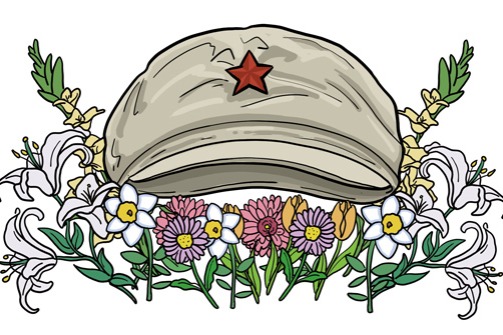
Commemorating the 80th anniversary of the victory in the war of resistance against Japanese aggression and World War II is not about nursing nostalgia, but about keeping the spirit of resistance against injustice and fascism alive. The rise of new forms of extremism, terrorism and xenophobia shows that the poison of fascism remains a threat. Hence, the world must once again use its strongest weapon — unity — against injustice.
As Marx and Engels noted, history becomes "world history" only when the destinies of nations interconnect. Our interconnected age demands that we move beyond cycles of dominance and conflict toward lasting peace and shared prosperity.
The cry of "world unity" that resounded in the 1940s must echo again — not as a distant memory but as a living mission. The victory of the Chinese people against fascism laid the foundation of China's modernization and the rejuvenation of the Chinese nation. More important, it left humanity a legacy: that by remaining united, people can defeat the darkest forces, and that only through cooperation can we safeguard civilization's future.
The author is deputy head of the Academy of Xi Jinping Thought on Socialism with Chinese Characteristics for a New Era, Renmin University of China.
The views don't necessarily represent those of China Daily.
If you have a specific expertise, or would like to share your thought about our stories, then send us your writings at opinion@chinadaily.com.cn, and comment@chinadaily.com.cn.