The US military actions in the Caribbean: Neo-Monroe Doctrine exposes its hideous face









An unprecedented "narcotics interdiction" by warships
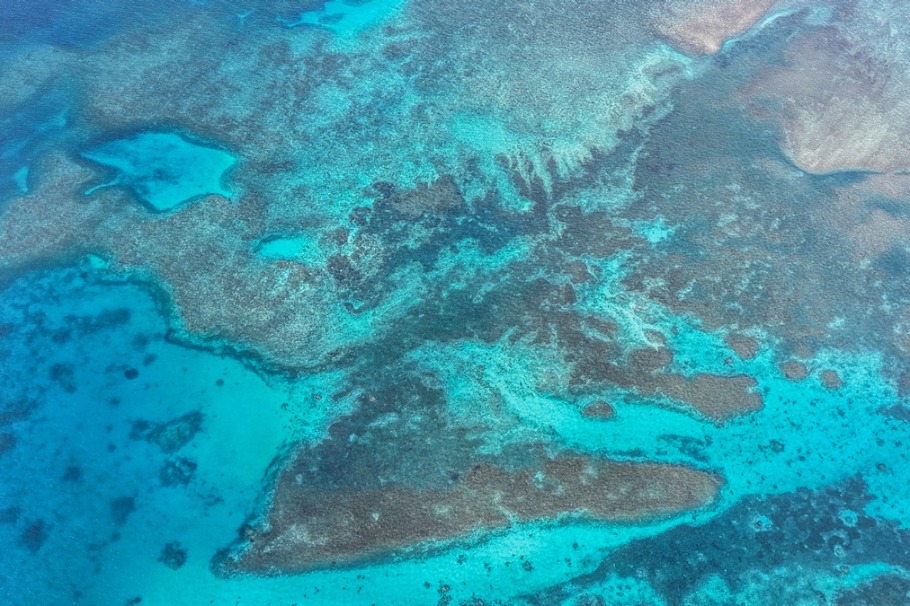
Since late August, the United States has deployed military forces near Venezuelan waters under the pretext of combating drug trafficking, which reportedly included eight warships, one nuclear submarine, nearly 10,000 navy and marine corps personnel, 10 F-35 fighter jets stationed in Puerto Rico, and three B-52 strategic bombers loitering off Venezuela's coast.
The US administration has disingenuously branded this military action as an "anti-drug operation." It claims to have struck several "drug-trafficking vessels," thereby "probably [saving] at least 100,000 American lives." Yet no details have been provided, making the justifications for these strikes hard to believe.
First, the US "legal justification" is questionable. Under the Charter of the United Nations and customary international law, a country may only exercise self-defense in response to an armed attack. While Venezuela has launched no such attack against the US, the latter's action constitutes a flagrant violation of the Charter and a grave breach of the fundamental norms of international law.
Second, such military actions amount to unprecedented extrajudicial killings. By ordering warships to target and destroy "drug boats" without congressional authorization or standard procedures such as hailing or warning shots, the US is in effect using lethal force indiscriminately in broad daylight.
This "drug interdiction" operation also blatantly infringes upon the sovereignty of another nation. Combating transnational crimes such as drug trafficking should be based on the principle of sovereign equality, and pursued through law enforcement and judicial cooperation under relevant bilateral and multilateral treaties. By unilaterally labeling entities as "terrorists" or "narcotics traffickers," however, the US violates fundamental international obligations to not interfere in the internal affairs and refrain from the threat or use of force against other countries.
The insatiable thirst for domination and resources
Since the inception of the Monroe Doctrine, Latin America and the Caribbean have been treated by the US as its "backyard." The current US military deployment in the Caribbean is merely the latest overt move, which lays bare once again the real intentions of the US.
One of the priorities on its agenda is to consolidate hemispheric hegemony. From the "troika of tyranny" narrative against Venezuela, Cuba, and Nicaragua to the recent "narcotics interdiction," the US has strategically refocused on the Western Hemisphere. This "war on drugs" is intended to assert absolute control, create opportunities to eliminate "anti-American troublemakers," and deter other major powers from expanding their influence.
On the other hand, it seeks to tighten its grip on resource-rich Latin American nations. US capital and financial oligarchs consistently seek to dominate resource-abundant regions, as evidenced by the Gulf War, the Iraq War, the "Arab Spring," and the ongoing Ukraine crisis. The same pattern holds true in Venezuela, where the US never reconciled with the leftist government's nationalization of the oil industry, which was once dominated by US interests. Now, a few super-hawks are hovering over Venezuela, attempting to reassert that control over the country's energy and key mineral resources.
International rejection and internal criticism
The hegemonic and bullying behavior of the US has spurred significant international and domestic opposition. Regional powers including Brazil, Mexico, and Colombia, alongside left-leaning nations such as Cuba and Nicaragua, have explicitly opposed the US military threats. The Bolivarian Alliance for the Peoples of Our America (ALBA) denounced the US military escalation, while the Community of Latin American and Caribbean States (CELAC) issued a statement — supported by most of its members — calling for respect for sovereignty of nations and noninterference.
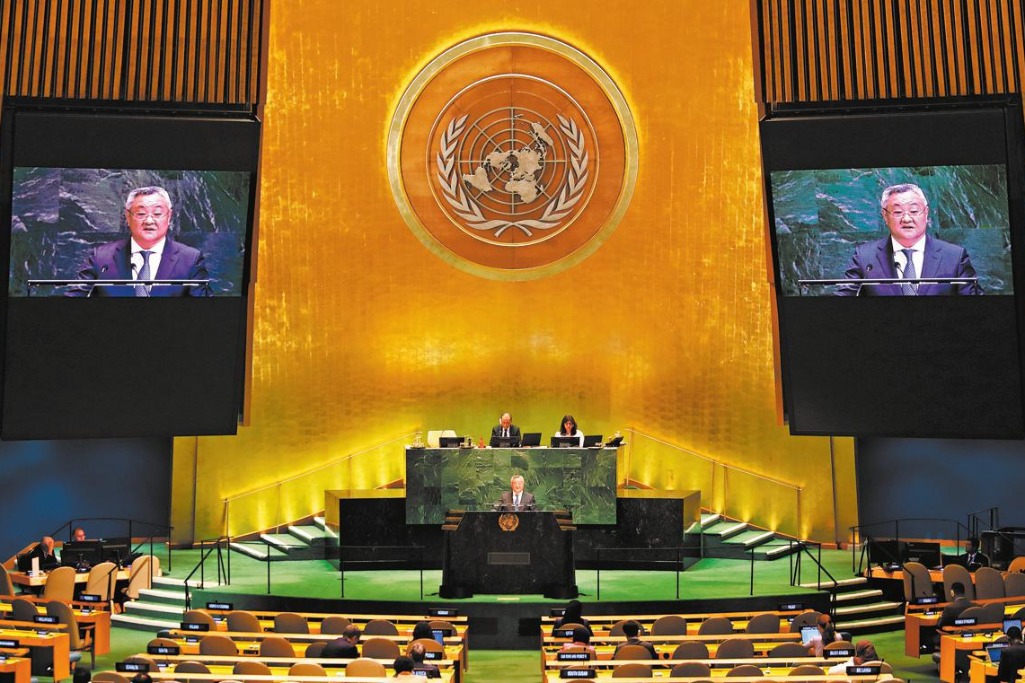
China, Russia, Iran, Belarus, and the "Group of Friends in Defense of the Charter of the United Nations" condemned the US for its grave infringement upon the sovereign security and development rights of other countries. Russia, the rotating president of the UN Security Council for the month, urged the US to immediately cease pressuring Venezuela and "not make irreparable mistakes." Separately, the UN human rights chief released a report condemning US military threats.
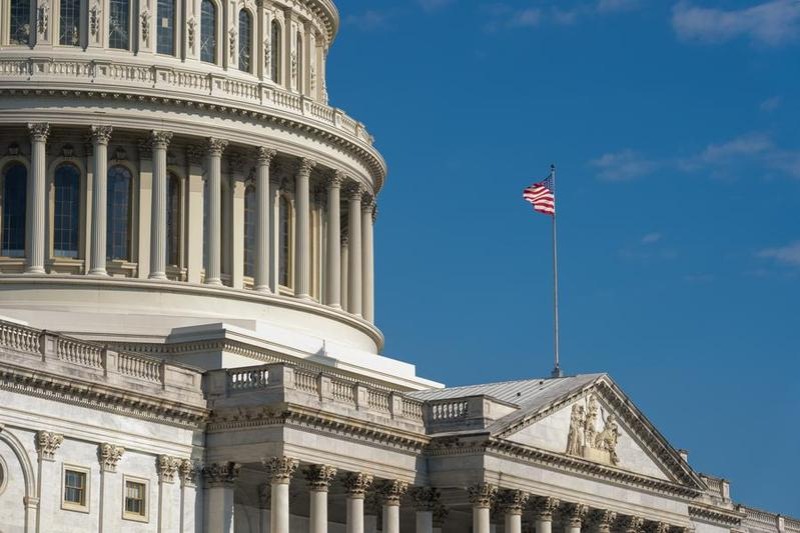
Domestically, the military action has drawn bipartisan criticism. Democratic Congressman Jim Himes, a member of the House Intelligence Committee, said on the CBS's "Face the Nation" that "Congress is being told nothing" and called the boat strikes "illegal killings." Democratic Senator Jack Reed, former chairman of the Senate Armed Services Committee, also stated that there was no credible legal justification for the strikes. Among Republicans, Senator Rand Paul of Kentucky criticized the administration for attempting to circumvent Congress and declare war abroad.
Numerous social media users have denounced the "killing of innocent people," noting that the strikes took place as far as 2,500 miles from the US coast, which would be impossible for the targeted speed boats to traverse. Observers point out that while Venezuela is not a primary source of drugs for the US, what is really being targeted is Venezuelan oil. They argue that the "drug boat" accusation is nothing but a fabricated pretext for intervention, just like the false WMD claims used to justify the Iraq War. A total of 62 nongovernmental organizations sent a joint letter to Congress, demanding a halt to the military operations.
US belligerence in Latin America and the Caribbean is far from popular, finding no support either abroad or at home. One thing is for sure: if the US continues on this path of unilateralism, it will reap what it sows. History tells us that the only viable path forward is built on mutual respect for sovereignty, noninterference, and resolution of disputes through peaceful dialogue. Transnational crimes can only be effectively thrashed through proper law enforcement and judicial cooperation, not military actions.
The author is a commentator on international affairs.
The views don't necessarily reflect those of China Daily.
If you have a specific expertise, or would like to share your thought about our stories, then send us your writings at opinion@chinadaily.com.cn, and comment@chinadaily.com.cn.